Glass services
Custom-cut and installed mirrors
Need a mirror cut to size or safely replaced? Here’s what custom mirror work usually involves, what affects the price, and how to find a licensed local glass pro through Clearpane’s free matching service.
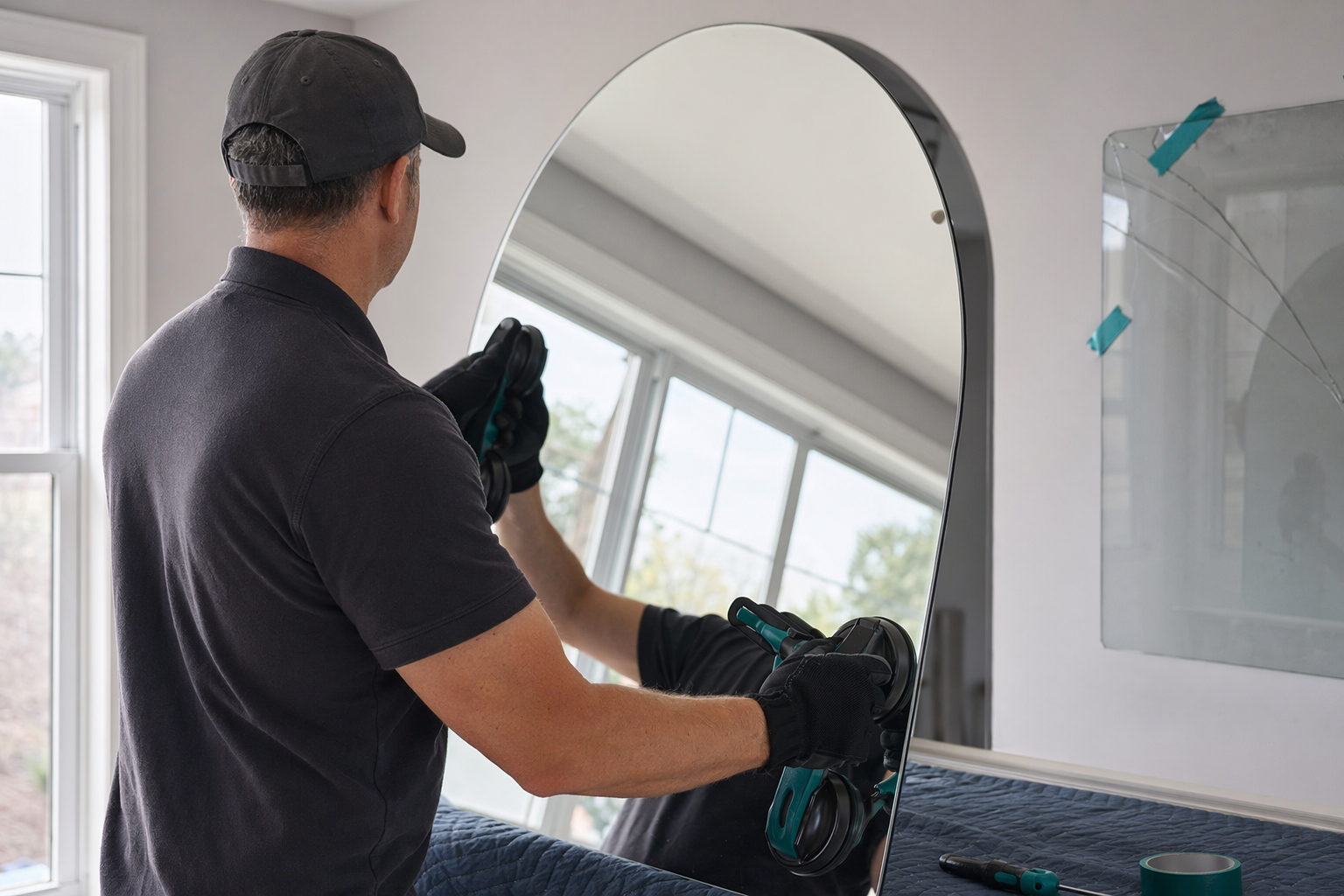
What to do right now if a mirror is cracked or broken
- Keep people and pets away from the area first. Broken mirror glass can cause serious cuts.
- If someone is hurt, get first aid or call the local emergency number first.
- Do not touch loose shards with bare hands. If you need to make the area safer, wear sturdy gloves and shoes and carefully keep others away until a licensed glass pro can help.
- If a wall mirror, closet-door mirror, or large framed mirror looks loose or partly detached, avoid standing under or in front of it. Do not try to rehang or remove a heavy mirror by yourself.
Clearpane is a free matching service, not a glass company, glazier, or contractor. We do not do the glass work ourselves, but we can help you connect with licensed, insured local glass pros through get matched.

What custom mirror work includes
Custom mirror work usually means a mirror is cut to the size and shape needed for your home, then finished and installed to fit the space. Common projects include bathroom vanity mirrors, full wall mirrors, gym or dance room mirrors, closet-door mirror panels, entry mirrors, and replacement mirrors for older frames or furniture.
A glass pro will usually ask where the mirror is going, the approximate size, whether it will be mounted on a wall or inside a frame, and whether it needs holes, cutouts, or special edges. For example, a simple rectangular vanity mirror is usually easier than a large wall mirror with outlet cutouts, or mirrored panels for sliding closet doors.
In some cases, people ask about re-silvering an old mirror instead of replacing it. Re-silvering can make sense for a special antique or sentimental piece, but for many everyday home mirrors, replacement is often simpler and sometimes less expensive. The best option depends on the mirror’s condition, size, backing, and whether the glass itself is damaged.
If you are not sure what kind of home glass project you have, our services and repairs pages can help you compare common residential glass jobs.
Mirror types, edge finishes, and backing options
Not all mirrors are exactly the same. A pro may talk about mirror thickness, clarity, safety backing, and edge finish. Thicker mirrors often feel more solid and may look flatter over a large span. Standard clear mirror works for many homes, while low-iron mirror can give a cleaner, less green tint at the edge.
Edge work affects both look and cost. A basic seamed edge is usually the most practical when the edge will be hidden by a frame or trim. Polished edges are smoother and more finished-looking for exposed mirror edges. Some people also choose beveled edges for a more decorative look, though that usually costs more.
Backing and mounting matter too. In some homes, a pro may suggest a safety backing film, especially for certain applications where local code or practical safety concerns matter. Doors, shower areas, and some low or large glass locations may require safety glass or other code-specific materials. Local rules vary, so a licensed glass pro should confirm what is allowed and what is needed.
Common options people ask about include:
- Frameless wall mirrors
- Vanity mirrors cut around lights or outlets
- Mirrored closet or wardrobe door panels
- Decorative beveled mirrors
- Antique-style or tinted mirror
- Replacement mirror glass for an existing frame
How a glass pro measures and installs a custom mirror
For a new mirror, a glass pro will usually take site measurements instead of relying only on homeowner measurements. Walls are not always perfectly level or square, and a small measuring error can matter a lot on a large mirror. If the mirror needs cutouts for outlets, sconces, or hardware, careful measuring is even more important.
After measuring, the mirror is cut and edge-finished to match the order. Depending on the project, the installer may use clips, channels, adhesive systems, a frame, or a combination of methods. The right method depends on the mirror size, wall type, weight, moisture exposure, and local code requirements.
Installation is usually about getting a clean fit, secure support, and a flat appearance with no stress points. Large mirrors can be heavy and awkward to handle, so this is usually not a one-person job. A licensed, insured glass pro should also check the condition of the wall or mounting surface before installation.
If you live in a rental, ask your landlord or property manager before ordering custom mirror work. Who pays and who approves the work can vary by lease and by area.
What custom mirrors usually cost
For many homes, a simple custom-cut mirror panel may start around $150 to $400 for a smaller basic piece, while many installed vanity or wall mirrors land somewhere around $300 to $900. Larger decorative mirrors, full wall mirrors, gym mirrors, closet-door mirror panels, or mirrors with polished or beveled edges, cutouts, special finishes, and more involved installation can run about $800 to $2,500 or more.
If you are replacing broken mirror glass in an existing frame, the range may be lower than a full new installed mirror, but it depends on size, thickness, edge work, and whether the old mirror has to be safely removed. Re-silvering a special older mirror can sometimes cost as much as or more than replacement, especially if transport and restoration work are involved.
The real price depends on the glass type and thickness, the mirror size, edge finish, holes or cutouts, backing, installation method, wall conditions, and your area. These are not quotes. A written quote from a local pro is the number that matters.
For more general price examples for home glass projects, you can also visit our costs page.
What to watch for and how to hire a local glass pro
A good mirror job starts with clear measuring, a written scope, and a written price before work begins. Be cautious if someone gives only a vague number, pressures you to decide immediately, asks for cash only, cannot show licensing or insurance when applicable, or tries to upsell you into a much bigger project without explaining why.
It is also smart to ask whether the quote includes removal and disposal of old mirror glass, edge finishing, cutouts, delivery, and installation hardware. If a mirror is going in a bathroom, closet door, or another area where safety rules may matter, ask the pro to explain what material they plan to use and why. Local building codes vary.
The household stays in control. You can compare quotes, choose who to hire, confirm the price before work starts, and inspect the installation before paying the final amount. If something is unclear, ask for it in writing first.
Clearpane is free for the household. We only collect contact and project intent details such as your name, phone, optional email, project type, ZIP code, and preferred language so we can help connect you with local pros through get matched.
- Ask if the pro is licensed and insured
- Get the full price in writing before work starts
- Ask who handles removal and disposal of old glass
- Confirm edge finish, thickness, and any cutouts on the order
- Check the installed mirror before final payment
Custom mirror work means measuring, cutting, finishing, and safely installing mirror glass to fit your home, and it is smart to get a written quote from a licensed, insured local pro before any work starts.
Common questions
Can a mirror be cut to fit around an outlet or light fixture?
Often yes, but cutouts add labor and need careful measuring. The final cost depends on the size, thickness, edge work, and how complex the cutout is.
Is it cheaper to replace a mirror or re-silver it?
For many everyday household mirrors, replacement is often simpler and may cost less. Re-silvering can make sense for an antique or sentimental mirror, but the right choice depends on condition and size.
Do I need safety glass for a wall mirror?
Sometimes special safety requirements apply depending on where the mirror is installed, such as doors or certain low or large glass locations. A licensed local glass pro should confirm what your area requires.
How long does custom mirror installation take?
It depends on the size, edge finish, whether the mirror needs cutouts, and the shop’s schedule. A basic project may be faster than a large wall mirror or a custom closet-door panel, so ask for a timeline before you hire.
Can I replace just the mirror on my closet door?
Sometimes yes, especially if the door itself is still in good shape. A pro can check whether only the mirror panel needs replacement or whether the door hardware or frame also needs attention.
How do I avoid overpaying for custom mirror work?
Get the price in writing, compare quotes, and ask exactly what is included. Be careful with vague pricing, scare tactics, cash-only demands, or pressure to replace more than you really need.