Glass services
Glass tabletops, shelves and cabinet panes
Broken tabletop or shelf glass can feel stressful, but you can handle it step by step. Here’s what this kind of home glass work usually involves, what it may cost, and how to find a local licensed glass pro.
What to do right now if the glass is broken
If a tabletop, shelf, or cabinet pane just cracked or shattered, focus on making the area safe first. Broken glass can cause serious cuts. If anyone is hurt, get first aid or call the local emergency number first.
- Keep children and pets away from the area.
- Do not touch sharp edges with bare hands.
- If it is safe, carefully remove loose items from the table, shelf, or cabinet.
- Pick up large pieces with thick gloves and place them in a sturdy box or wrap them before disposal.
- Vacuum very small pieces from the floor, rug, and nearby corners.
- Do not keep using the table, shelf, or cabinet until a glass pro says it is safe to reinstall or replace.
If the glass is cracked but still in place, avoid leaning on it or putting weight on it. A local licensed, insured glass pro can tell you whether the piece should be replaced and what type of safety glass may be required by local code.

What this service includes
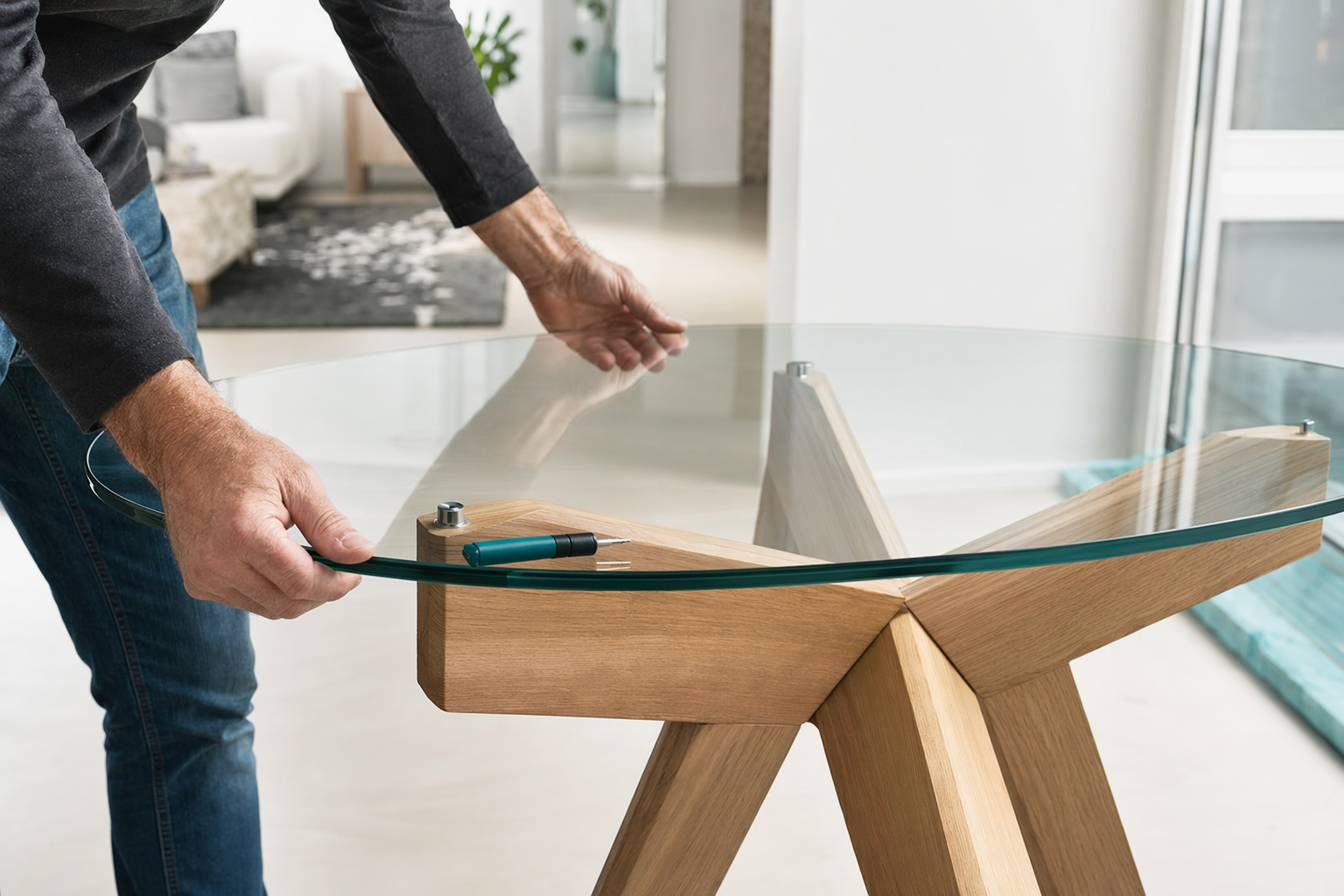
Glass for tabletops, shelves, and cabinet doors is usually cut to size for the exact opening or furniture piece. This may include a protective glass top for a wood table, a replacement glass shelf, a cabinet door pane, or a custom piece with polished edges and rounded corners.
A glass pro will usually ask what the glass is for, where it will sit, and whether people may lean on it, slide things across it, or open and close it often. That matters because the right thickness and glass type for a cabinet pane may be different from the right choice for a dining table, bathroom shelf, or floating shelf.
Some jobs are simple cut-to-size replacements. Others need custom shaping, drilled holes, corner cut-outs, notch work, or special edge finishing so the glass looks finished and feels safer to touch. For more home glass project types, you can also browse services or common repairs.
- Tabletops for dining, coffee, side, and desk tables
- Shelves for bathrooms, kitchens, closets, and display areas
- Cabinet door glass
- Custom cut pieces with polished edges or rounded corners
Tempered vs annealed, plus edges and corners
Two common glass choices are annealed glass and tempered glass. Annealed is standard glass. Tempered is heat-treated to be stronger and, when it breaks, it usually breaks into many small pieces instead of large sharp shards. In many home situations, especially where people may bump into the glass or where code requires safety glass, tempered is the safer and sometimes required option.
Doors, shower enclosures, and some low or large glass areas often require tempered or other safety glass by code. Shelves and tabletops may also be better with tempered glass, depending on the size, thickness, support, and how the piece will be used. A licensed glass pro should confirm what is appropriate for your job and local area. Clearpane gives general information only and does not perform glass work.
You may also choose how the edges and corners are finished. A raw cut edge is usually the lowest-cost option, but many homeowners prefer a seamed, flat-polished, or pencil-polished edge for a smoother, more finished look. Corners can often be square with eased points or rounded to reduce sharp contact points. More edge work and custom shapes usually cost more.
- Annealed: standard glass, usually lower cost
- Tempered: stronger safety glass, often required in some locations or uses
- Polished edges: smoother look and feel
- Rounded corners: common for tabletops and some shelves
How a glass pro measures and installs it
For a simple tabletop cover, the pro usually measures the length and width and confirms the shape, corner style, and edge finish. For a shelf, they may measure the opening, depth, support points, and how much weight the shelf is expected to hold. For a cabinet pane, they often measure the exact opening, check how the panel is held in place, and note whether the frame needs reglazing points, clips, or another fastening method.
If the piece is replacing broken glass, the pro may use the old dimensions if they can be confirmed, but they will usually re-measure rather than guess. That is especially important for built-ins, corner shelves, curved furniture, and cabinet inserts, where even a small measuring error can mean the glass does not fit.
Installation may be as simple as setting the glass in place on bumpers or supports, or it may include removing the old pane, cleaning the frame or supports, checking for level, and fitting the new glass so it sits evenly. If tempered glass is needed, it is usually cut and finished before tempering, which means last-minute changes often are not possible.
What it may cost
Prices vary a lot based on the glass type and thickness, whether it is annealed or tempered, the size, the edge work, custom cuts, and your area. These are general ranges, not quotes. A local pro should give you the final price in writing before work starts.
For a small simple shelf or cabinet pane, you might see something like about $75 to $200 for a basic cut piece, depending on size and finish. A medium custom shelf or cabinet insert with polished edges may run around $150 to $350 or more. A glass tabletop cover often starts around $150 to $400 for a smaller straightforward piece and can go to $400 to $900 or more for larger, thicker, tempered, shaped, or polished pieces. Custom shapes, holes, notches, radius corners, and heavy glass can push the price higher.
If you need on-site measuring, delivery, old glass removal, or careful placement on a large or heavy piece, labor may add to the total. Rush orders may also cost more. You can read more about general home glass pricing on our costs page, but the real number depends on the exact piece and local market.
- Small shelf or cabinet pane: often about $75-$200+
- Custom shelf or cabinet insert: often about $150-$350+
- Tabletop glass: often about $150-$900+
- Tempered, thicker glass, polished edges, and custom shapes usually cost more
What to watch for before you hire
Ask whether the company is licensed and insured for this kind of residential glass work in your area, and verify it. Get the full price in writing before work starts. The household stays in control: you can compare quotes, choose who to hire, confirm the final price, and check that the glass matches what you ordered before paying the final amount.
Watch out for vague pricing, scare tactics, cash-only demands, no proof of license or insurance, or pressure to do more work than you asked for. With tabletops, shelves, and cabinet glass, one common problem is being pushed into a more expensive glass type or a full furniture replacement without a clear reason. Ask the pro to explain the thickness, glass type, edge finish, and timeline in plain language.
It is also smart to ask what happens if the measured piece arrives and does not fit, and whether delivery and installation are included. If you are a renter, responsibility for repair or replacement may depend on your lease and local rules. Costs, codes, and who pays can vary by area.
How Clearpane can help you find a local glass pro
Clearpane is a free matching service. We are not a glass company, licensed glazier, or contractor, and we do not perform glass work. We help connect households with local licensed, insured glass pros for residential projects like tabletops, shelves, cabinet panes, and other home glass jobs.
To get matched, you can use get matched. We only collect contact and project intent details: your name, phone, optional email, project type, ZIP code, and preferred language. Then you can speak with local pros, compare options, and decide what works for you.
That means you stay in control. You choose who to talk to, ask for the price in writing, and decide whether to move forward. No promises, no guaranteed price, and no guaranteed timeline — just a simpler way to start with local help.
If you need glass cut to size for a tabletop, shelf, or cabinet, make broken glass safe first, then compare written prices from licensed local pros and confirm the right glass type, thickness, and edge finish before ordering.
Common questions
Can I replace just the glass on a table or cabinet door?
Often yes, if the furniture frame or cabinet door is still in good shape. A glass pro can measure the opening and tell you whether a cut-to-size replacement is reasonable.
Should I get tempered glass for a tabletop or shelf?
Many homeowners choose tempered glass because it is stronger and safer if it breaks. Whether it is needed depends on the use, size, thickness, support, and local code, so ask a licensed glass pro to confirm.
How do I measure for a glass shelf or tabletop?
Measure carefully in more than one place and note the shape, corner style, and thickness if known, but it is usually best to have a pro confirm measurements before ordering. Small errors can lead to a poor fit.
Can broken cabinet glass or shelf glass be repaired?
Usually broken glass itself is replaced, not repaired. If the surrounding frame, clips, or supports are damaged, those may also need attention.
How long does custom glass take?
It depends on the size, glass type, edge work, and local shop workload. Tempered and custom-shaped pieces often take longer than simple cut glass, so ask the pro for an estimated timeline before you approve the job.
What information do I need to get matched with a glass pro?
Usually just your name, phone, optional email, project type, ZIP code, and preferred language. Clearpane does not ask for financial account numbers, Social Security numbers, income, or sensitive personal records.