Repairs
Broken glass tabletop or shelf — replace it right
Glass on a table, shelf, or cabinet can break suddenly and leave sharp pieces behind. First make the area safe, then you can figure out whether you need a simple replacement piece or a bigger repair.
First 10 minutes — make broken glass safe
If glass just broke, making the area safe comes first. Here's a calm, safe order to follow.
- 1 Keep everyone clear of the glass. Move children and pets away from the area. Put on shoes and gloves. Don't pick up large shards with bare hands — broken glass can cause deep cuts.
- 2 Clean up safely. Sweep up big pieces into a thick bag or box, then lift tiny slivers with a damp paper towel or tape. Tape a piece of cardboard over the opening if a window broke.
- 3 Secure the opening. If a window or door glass is gone, cover the opening with plywood or heavy cardboard and tape to keep weather, pests, and intruders out until a pro arrives. Take a few photos for your records.
- 4 Get a licensed glass pro. Get matched, free, with a licensed local glass pro. Ask for the price in writing before work starts — you compare quotes and choose who to hire.
What to do right now
- Keep everyone away from the area, including children and pets. Broken glass can cause serious cuts.
- Put on shoes and thick gloves if you need to go near it. If someone is hurt, give first aid or call your local emergency number first.
- Do not grab large sharp shards with bare hands. Carefully place bigger pieces into a sturdy box or wrap them in thick paper before putting them in the trash, if local rules allow.
- Vacuum small pieces from the floor and nearby fabric carefully, then check again in good light. A lint roller or damp paper towel can help pick up tiny slivers.
- If the broken glass was part of a cabinet door, shelf, or display opening, keep that area closed off until it is fixed. If you need more cleanup tips, see how to make broken glass safe.
- If you want help finding someone nearby, Clearpane can match you with licensed, insured local glass pros. Clearpane is a free matching service only — we do not do the glass work ourselves.

Is this a glass-only replacement or a bigger job?
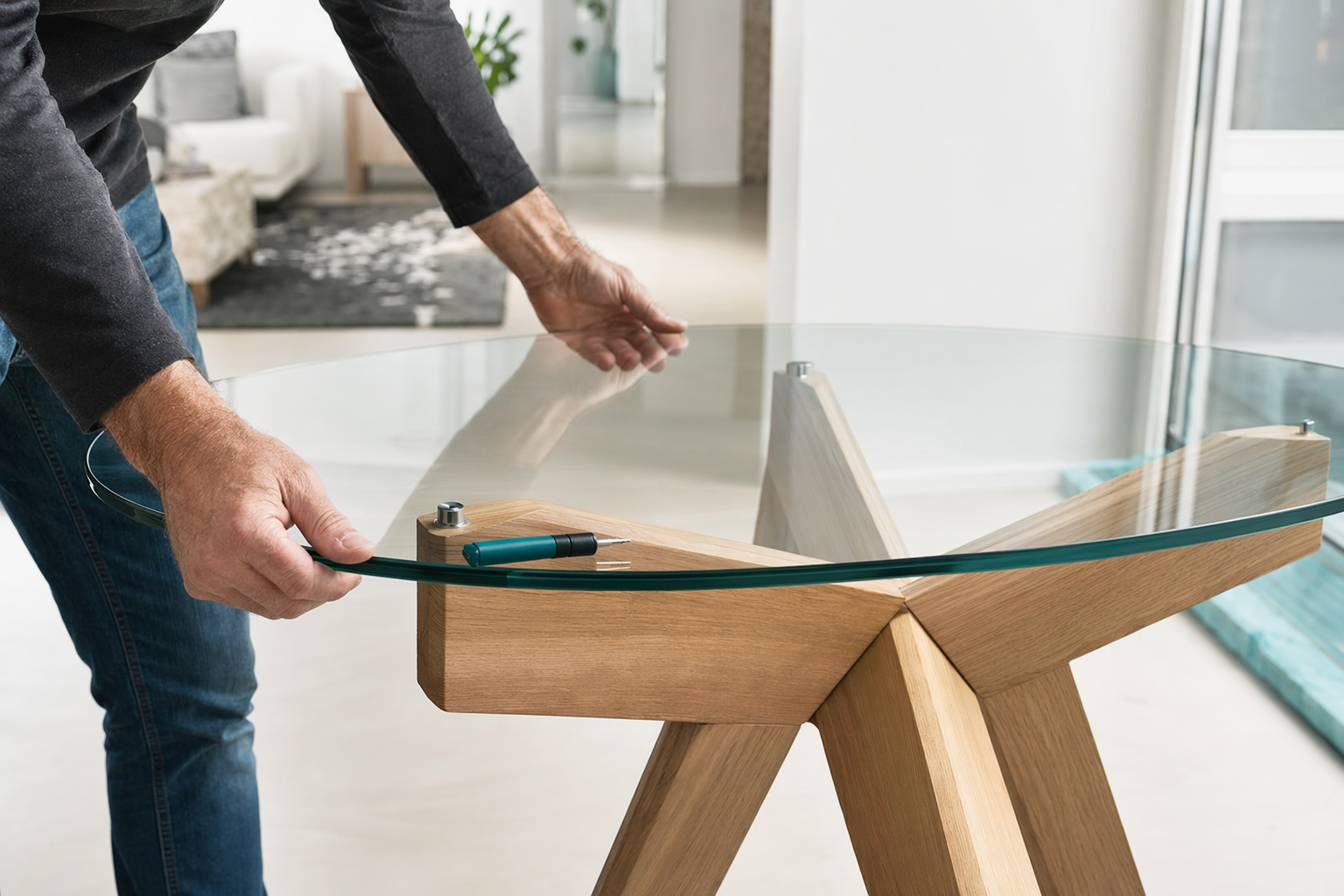
Sometimes the fix is just a new piece of glass cut to size. That is common for a loose tabletop, a shelf insert, a cabinet pane, or a protective glass top sitting on furniture.
Other times, the frame or furniture itself is damaged too. If the metal clips bent, the wood groove split, the shelf supports pulled loose, or the cabinet door frame cracked, replacing the glass alone may not solve the problem.
A local glass pro can tell you whether you need only a replacement pane or also hardware, supports, edge polishing, new bumpers, or repairs to the furniture piece. In homes, safety glass may be important in some locations, especially around doors or areas where people are likely to bump into the glass. Local codes and product requirements vary by area, so defer to a licensed glass pro.
- Loose glass top on furniture: often glass-only
- Shelf insert or cabinet pane: often glass-only if frame is sound
- Cracked wood frame, bent supports, loose hardware: may be a bigger repair
- For doors or impact-prone areas, tempered or other safety glass may be required
Tempered vs annealed glass, and why it matters
For tabletops and shelves, the glass type matters for both safety and cost. Tempered glass is heat-treated so it is stronger than standard annealed glass and, when it breaks, it usually shatters into many smaller pieces instead of large sharp shards. Standard annealed glass is more basic and may cost less, but it breaks into dangerous sharp pieces.
Many homeowners choose tempered glass for tabletops, shelves, cabinet inserts, and other places where people lean, sit things down, or may bump into the glass. Some pieces may also use laminated glass or thicker glass for extra strength, but the right choice depends on the size, use, supports, and location.
A glass pro may also ask about the edge style and corners. A polished edge looks cleaner and is safer to touch than a raw cut edge. Corners can be eased, rounded, or shaped to match the old piece. These details affect both appearance and price.
- Tempered: stronger, often the safer choice for tables and shelves
- Annealed: more basic, usually lower cost, but breaks into sharp shards
- Thicker glass costs more but may be needed for larger spans or heavier use
- Polished edges and shaped corners usually add to the price
How to measure for a replacement piece
If the old glass is mostly intact, measuring the existing piece can help you get a more accurate quote. If it shattered completely, measure the opening carefully in more than one spot. For shelves, the exact fit matters. For a loose tabletop cover, the overhang and corner shape matter too.
Measure width and length to the nearest fraction you can read, and note whether the glass sits inside a frame, rests on clips, or simply lies on top of furniture. Also look at the corners: square, clipped, or rounded. If the glass had a tint, frosted finish, pattern, or bevel, note that as well.
If you are not sure, it is okay to stop at basic measurements and let a pro verify them. A bad measurement can lead to a piece that does not fit. For many people, the easiest next step is to share the project type, ZIP code, and preferred language through Clearpane’s free matching service, then confirm details directly with the glass pro.
- Measure width and length carefully
- Note thickness if known
- Say where the glass sits: frame, clips, shelf pins, or tabletop bumpers
- Take clear photos of the furniture and the broken area
What it may cost
For a home glass tabletop, shelf, or cabinet pane, a simple replacement piece often falls somewhere around $100 to $400 for a smaller standard job. Larger pieces, thicker glass, tempered glass, polished edges, rounded corners, bevels, tints, and custom shapes can push the total higher — often into the $400 to $900+ range, and sometimes more for large or complex pieces.
If the job also needs on-site measuring, delivery, installation, hardware, shelf supports, cabinet door work, or furniture/frame repair, the price can increase. Emergency or rush service may also cost more.
These are general ranges, not quotes. The real number depends on the glass type and thickness, size, edge work, corner details, whether it is tempered or laminated, whether installation is needed, and your area. You can compare more general pricing on our glass repair cost guide or browse other home glass repairs.
- Small basic shelf or insert: often lower end of the range
- Custom tabletop with polished edge and rounded corners: usually more
- Tempered glass usually costs more than basic annealed glass
- Get the full price in writing before work starts
Why tabletops and shelves break, and how to avoid problems
A lot of home glass breaks for simple reasons: the piece was not tempered, the glass was too thin for the span, the supports were uneven, a corner got bumped, or something heavy was set down hard. Small edge chips can also turn into big cracks later.
Heat and stress can matter too. Glass that sits unevenly on a hard frame, touches metal without protective pads, or gets pressure at one point may fail without much warning. Cabinet panes and shelves can also break when a door slams or a shelf is overloaded.
When you replace it, ask the glass pro whether the thickness, support points, edge finish, and glass type are right for how you use it. That can help you avoid paying twice for the same problem.
How to find a licensed local glass pro without getting overcharged
If you want help, Clearpane can help you find licensed, insured local glass pros near you. We are a free matching service for households — not a glass company, glazier, or contractor — and we only collect contact and project details such as your name, phone, optional email, project type, ZIP code, and preferred language.
When you talk to a glass pro, ask whether they are licensed and insured if your area requires it, whether they handle home tabletop and shelf glass, and whether the quote includes measuring, edge polishing, tempering, delivery, and installation. Ask for the total in writing before work starts.
Watch out for vague pricing, scare tactics, cash-only demands, no proof of license or insurance, or pressure to replace the whole furniture piece when only the glass needs replacing. You stay in control: compare quotes, choose who to hire, confirm the price before work begins, and check that the new glass looks right before paying the final amount. If you are ready, start here: get matched.
Make the broken glass safe first, then get a written price for the right replacement piece — often just the glass, but sometimes the supports or frame need attention too.
Common questions
Can I replace just the glass on a table or shelf?
Often yes. If the furniture frame, supports, and hardware are still in good shape, you may only need a new glass piece cut to size. If the frame or supports are damaged, the repair may be bigger.
Should a glass tabletop or shelf be tempered?
Many people choose tempered glass because it is stronger and usually breaks into smaller pieces instead of large sharp shards. The right choice depends on the size, use, location, and local requirements, so a licensed glass pro should confirm it.
How do I measure a replacement glass tabletop?
Measure the width and length carefully, note the thickness if known, and check whether the corners are square or rounded. Also note whether the glass sits inside a frame or rests on top of furniture, and let a pro verify measurements if you are unsure.
How much does replacement glass for a table or shelf cost?
A smaller, simple piece may be around $100 to $400, while larger or custom tempered pieces with polished edges or shaped corners are often $400 to $900 or more. These are general ranges only, not quotes.
Can I use regular glass instead of tempered glass?
Sometimes regular annealed glass is used, but it breaks into sharp dangerous shards. For many tabletops, shelves, and cabinet panes, tempered glass is the safer choice, and in some locations safety glass may be required.
Do I need a glass pro, or can I order a piece myself?
For a very simple loose glass cover, some people do order a replacement piece. But if the glass needs exact fitting, tempered safety glass, polished edges, shaped corners, installation, or support checks, a licensed glass pro is usually the safer and easier option.