Quick answers
Why did my shower door shatter on its own?
If your shower door shattered “by itself,” it’s scary—but it’s not always a mystery. In many cases it’s related to glass type, stress, or a small change in the door setup that you can’t easily see.
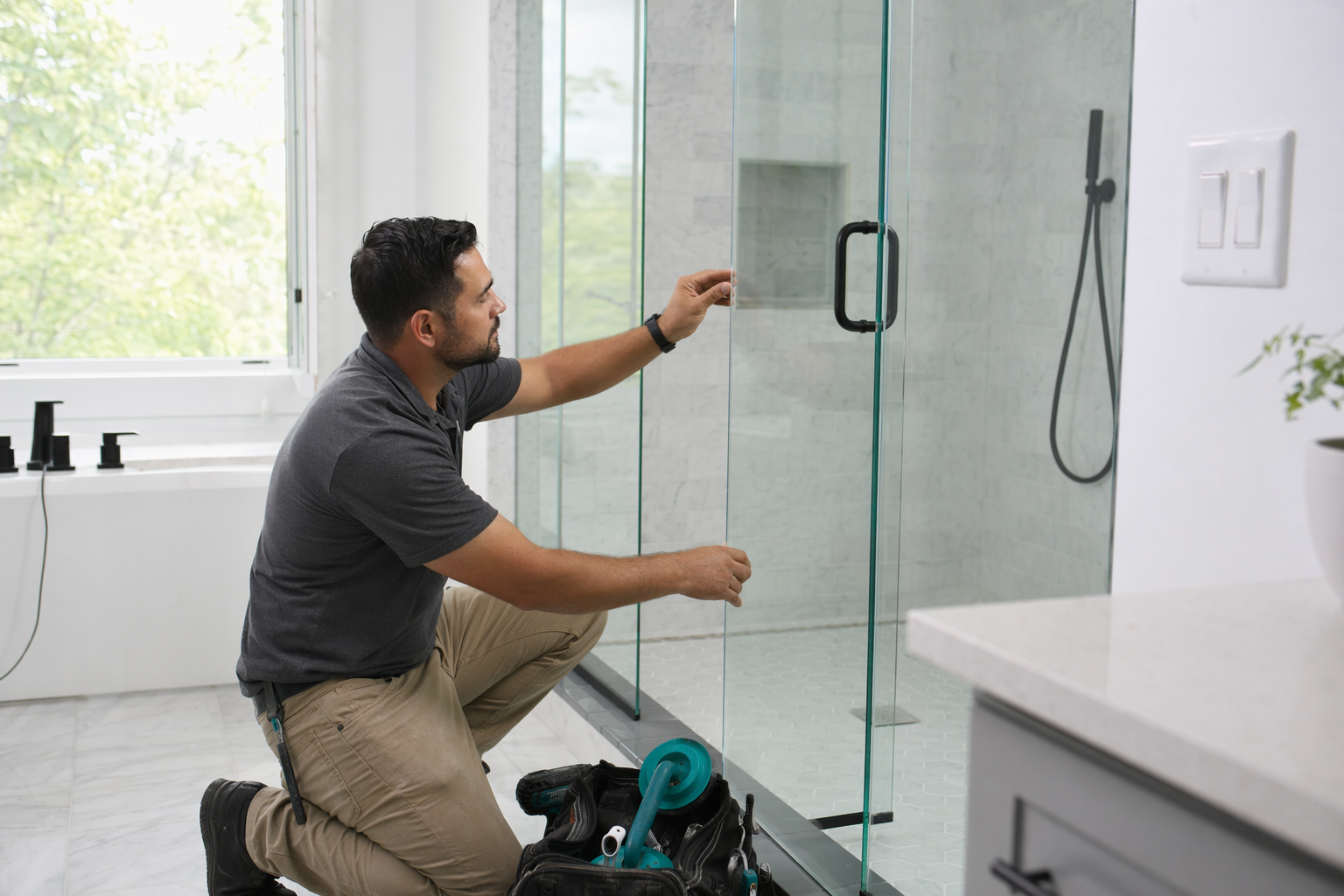
What to do right now (make the area safe)
1. Keep people away and don’t force the door to move. If anything is hanging or loose, leave it alone.
2. If there are sharp pieces, carefully put on sturdy shoes and use thick gloves when you collect big fragments. Sweep small shards gently (a damp paper towel or sticky tape can help).
3. Cover the opening with a temporary barrier (like heavy cardboard/plastic) so no one gets cut. Don’t tape directly onto glass if it’s still shifting.
4. Clean up thoroughly and check the floor and nearby surfaces for tiny shards before walking through the area.
- If someone is cut, get first aid right away and call your local emergency number if the injury is serious.
- For shower enclosures/doors, safety glass rules can apply—so a licensed, insured glass pro should handle the replacement.

Common reasons a shower door can shatter suddenly
Shower door glass can fail with little or no warning because glass is strong but not indestructible. Even small flaws or stress can grow over time, and then a door panel breaks on a random day.
A few common (and very human) causes include:
- A tiny nick, scratch, or chip at the edge that later turns into a crack
- A door that’s not perfectly aligned in its track/hinges, creating uneven pressure on the glass
- Temperature changes (hot shower steam or sudden cold) that stress the glass differently across the panel
- Prior impact that you may not notice (a dropped bottle, a bump during cleaning, a towel bar hitting the door)
- Hardware issues—loose screws, worn rollers, or mis-sized fittings that put point pressure on the glass
Sometimes it’s “on its own” because there was no big crash you remember. But the failure can be delayed—glass can hold stress for months or years before the final break.
- Foggy or stained glass doesn’t usually mean it will shatter, but buildup and rough handling can contribute to chips and edge damage.
Glass types explained (why the failure mode matters)
Shower doors are usually made from safety glass, often tempered or laminated. These materials are designed to reduce injury, but they still can break.
- Tempered glass: When it fails, it often crumbles into small pieces. It’s stronger for everyday use, but the edges and corners are especially important.
- Laminated glass: When it breaks, it may stay together in layers (or hold more of its shape). It’s common in some safety applications.
- Annealed glass (less common for shower doors): This is glass that hasn’t been heat-treated for safety. If a door has annealed glass, it can be a higher-risk situation and may need a code-compliant replacement.
Also, shower door systems matter. Even the right glass can fail early if the frame, gasket, rollers, or alignment apply pressure in the wrong places. That’s one reason it’s best to replace with the correct type and have the hardware checked by a licensed, insured glass pro.
- If you can, take a photo of the broken door and any hardware markings before cleanup (for identification, not repair).
Clues to look for (to help a glass pro diagnose)
You don’t need to be a specialist, but a few details can speed things up and help prevent repeat issues.
Consider noting:
- Where the first damage seems to start (edge, corner, mid-panel)
- Whether the glass crumbled into small pieces (often tempered) or stayed in a more “sheet-like” way (often laminated)
- Any loose hardware you’ve noticed (track screws, hinges, roller wheels)
- If the door ever rubbed or didn’t close smoothly
- Recent changes: new bathroom cleaner, a heavy impact, a remodel, or a bump during cleaning
Red flags that suggest the problem might be more than “just bad luck”:
- The door doesn’t sit level or it binds when you open/close
- There’s visible misalignment in the track or frame
- Multiple panels or mounting points look stressed or uneven
Share these observations with the glass pro when you request help. It can change what parts need checking or replacing alongside the glass.
- If you’re in a rental, check your lease/landlord process before buying parts—who pays can vary by area.
How much will replacement cost? (realistic ranges, not a quote)
Costs for shower door glass vary a lot. In many homes, replacement work can range roughly from a few hundred dollars to over $1,000+, depending on the door size, glass type (tempered/laminated), custom edging, and the complexity of the hardware and track.
What drives the price:
- Glass type and thickness (and whether it must meet local safety requirements)
- Full panel vs. partial replacement (some systems require more than one piece)
- Hardware condition (rollers, hinges, seals, clamps) and whether those need replacement too
- Edge work and fit (precise measurements are crucial for shower doors)
- Your area and how far the pro has to travel
Important: ranges are not quotes. The only fair way to know the cost is to get pricing in writing after the measurements and glass type are confirmed. Be cautious of scare tactics or vague “cash only” pricing—ask what exactly is included and confirm the total before work starts.
- Before you pay the final amount, confirm the glass is installed correctly and securely.
Get matched to a licensed local glass pro (free service)
Clearpane is a FREE matching service that helps you connect with licensed, insured local glass pros near you. We don’t do the glass work ourselves, and we don’t set prices—we just help you find the right help.
To get matched, share only:
- Your name and phone (and optional email)
- Your ZIP code
- What kind of project you need (shower door glass replacement)
- Your preferred language
Then compare options before you hire anyone. You stay in control: confirm the price before work starts and ask questions about what’s being replaced (glass only vs. glass plus any needed hardware). For general cost guidance, you can also review home glass repair costs and next steps in help.
- If you want, you can start here: [get matched](/get-matched/).
A shower door can shatter suddenly because of stress, edge chips, or misaligned hardware, so make the area safe and get matched to a licensed, insured local glass pro for a proper replacement.
Common questions
Does steam or hot water make a shower door shatter?
Steam and temperature swings can contribute to stress in some glass setups, especially if the door is already under uneven pressure from alignment or hardware. But shower door breakage is often linked to a crack or edge flaw plus stress over time.
Should I replace the whole shower enclosure or just the glass panel?
Often it’s possible to replace just the glass, but it depends on your door model, the fit, and whether the frame/hardware is damaged or misaligned. A licensed, insured glass pro should measure and tell you what replacement option matches your system and local safety requirements.
Is it normal for tempered glass to crumble?
Yes—tempered safety glass commonly breaks into smaller pieces. Still, the safest move is to avoid handling the door and get proper replacement help rather than trying to reuse broken pieces.
How can I prevent this from happening again?
Ask the glass pro to check door alignment, rollers/hinges, seals/gaskets, and any uneven pressure points—not just swap the panel. Also avoid impacts during cleaning and replace worn hardware promptly if the door starts to bind.
If I’m renting, who usually pays for a shower door glass replacement?
It can vary by lease terms and local rules. Contact your landlord/property manager soon and document the damage with photos.