Quick answers
What kind of glass is used in shower doors?
Most shower doors use safety glass that’s made to break in safer ways. If you’re replacing a shower door panel, the key is the glass type (tempered vs laminated) and the right size and hardware fit—so use a licensed, insured glass pro.
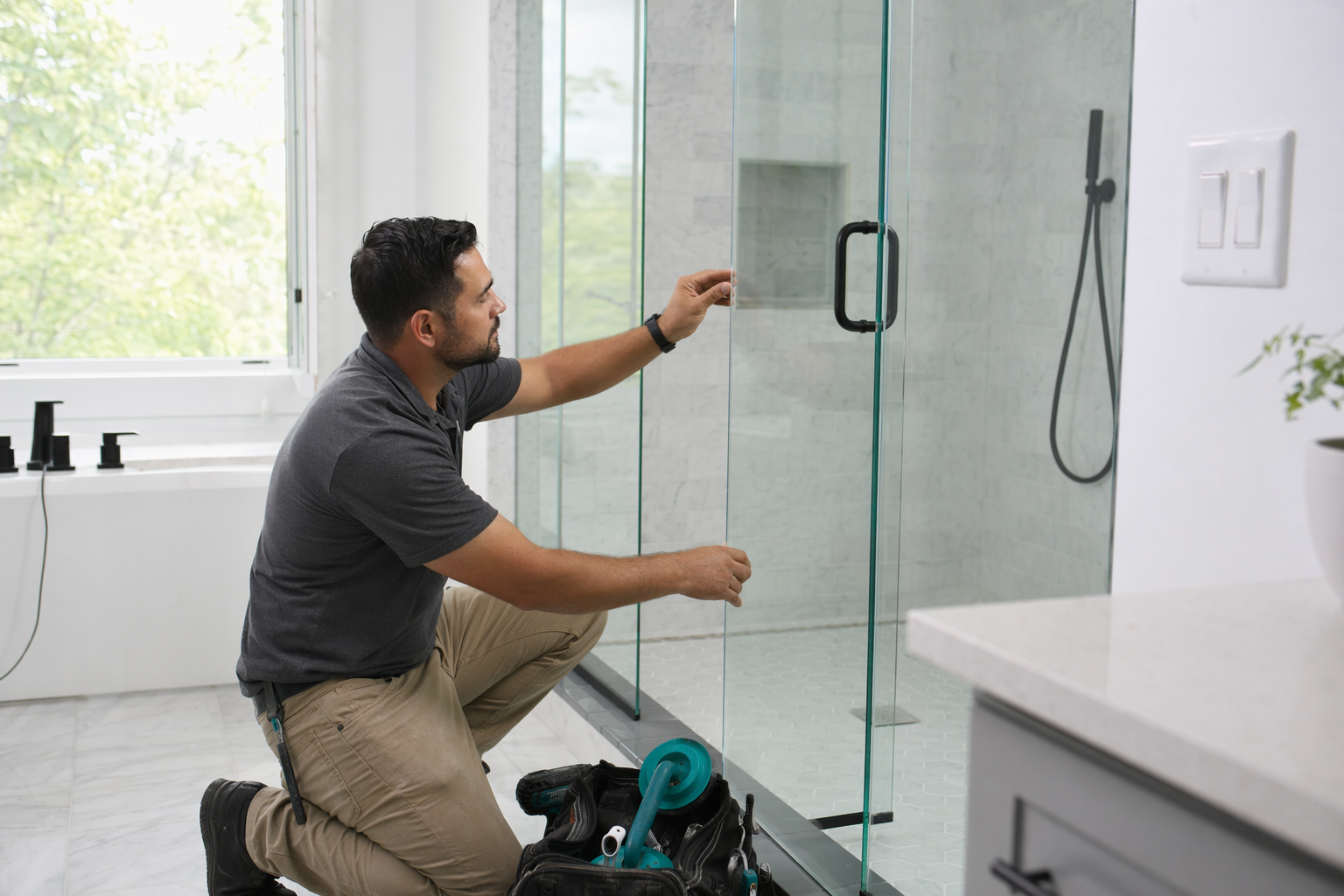
What to do first (and when to get help)
1. If the glass is broken or actively cracking, keep people away from the area and avoid touching sharp pieces.
2. Clean up carefully: use gloves if you have them, and sweep/vacuum small pieces only if you can do it safely.
3. If the shower door is out of place, cracked in a way that could fall, or someone is cut, get first aid and call your local emergency number if needed.
4. For the repair or replacement, do not guess the glass type—get help from a licensed, insured glass pro and confirm the right product for your door and local code.
- Clearpane is free and matches you with local glass pros—we don’t do the glass work ourselves.

The most common glass in shower doors
In many homes, shower door glass is tempered safety glass. Tempered glass is made so that when it breaks, it usually breaks into small pieces rather than long sharp shards.
Some shower doors use laminated glass, which helps hold together if it breaks. Laminated glass typically has a plastic layer between glass sheets, and it may be used when extra “stay-in-place” behavior is desired.
Many shower doors also use reinforced/modified designs (like thicker panels or specific edge finishes) depending on the door size, layout, and whether it’s a fixed panel, sliding panel, or hinged door. The exact choice depends on your specific shower system.
Tempered vs annealed vs laminated (plain-language guide)
Tempered: Common for shower doors. It’s heat-treated to improve safety performance if it breaks.
Annealed (regular glass): This is standard glass that isn’t safety-treated. You usually won’t find it used for the main shower door panels in many installations, because shower doors are typically required to use safety glass.
Laminated: Two glass layers with a plastic interlayer. If it cracks or breaks, the film helps reduce the drop of pieces and may keep fragments attached.
Important: Your door may be a mix of parts. For example, one panel might be safety glass while another piece (like certain trim components or sidelights) could be different. A glass pro can confirm what you have by matching the system and checking the existing panel.
What about foggy or failed double-pane/insulated units?
Foggy insulated glass (also called double-pane or IGU) is more common in windows, but some specialty shower enclosures can include insulated or multi-layer glass.
If your shower enclosure glass looks foggy, the issue could be moisture inside an insulated unit or a coating failure—not just “dirty glass.” In that situation, the right fix often means replacing the affected glass panel/unit with the correct type.
A key point: shower door panels still need to be the correct safety-rated glass for the application, even if they’re insulated. Don’t swap in a different glass type without confirmation from a licensed, insured glass pro.
How to identify what’s in your shower door (without guessing)
The safest way is to have the panel matched to your shower door system. You can do a few practical checks that don’t require special tools:
- Look for any visible markings on the glass edge or corner (often a manufacturer or safety labeling).
- Measure the panel size accurately (height and width) and note the door type: fixed panel, hinged door, or sliding door.
- Take clear photos: the glass panel, hardware, brackets, and how the panel sits in the frame.
When you contact a glass pro, they should ask for the door type and measurements and then confirm the correct safety glass for that installation. If a quote comes back with vague answers like “any glass will do,” ask more questions and consider getting a second opinion.
Common cost ranges (and what changes the price)
Shower door glass replacement costs vary a lot based on the glass type, thickness, panel size, and the hardware/edge work needed.
General ballpark ranges (not quotes):
- Simple tempered shower door panel replacement: often roughly $250–$900 for the glass-and-install portion in many areas.
- Larger custom panels, complex hardware fit, or special shapes: often roughly $700–$2,000+.
- Sliding systems and multiple panels: can increase the total depending on how many panels are being replaced.
What drives the real price: exact safety glass (tempered vs laminated), panel thickness, whether it’s standard size or custom, edge finishing/holes, coating needs, and your local market. Ranges are not guarantees—your measurements and the exact door model matter.
Red flags for pricing: pressure to replace the whole shower door when only one glass panel needs work, “cash only,” no clear written details, or a quote that doesn’t describe the glass type and panel being replaced.
How to get matched with a local glass pro (free)
Clearpane is a free matching service. We connect you with licensed, insured local glass pros who can replace or repair residential shower door glass.
To get matched, share your contact info, your ZIP code, your preferred language, and what you need (for example: “tempered shower door glass replacement” or “foggy enclosure glass”).
Next steps: you’ll confirm the price before work starts, compare quotes if you want, and make sure the glass and fit are correct before you pay the final amount. For more on getting help, see get matched. For cost help, see shower glass repair costs.
- Clearpane doesn’t perform glass work, and it’s always free for the household.
Shower doors are usually made with safety glass—often tempered, sometimes laminated—and the best way to replace it is to match the exact panel and hardware with a licensed, insured local glass pro.
Common questions
Is shower door glass always tempered?
Most shower doors use tempered safety glass, but not every system is the same. Some setups use laminated glass or different safety configurations. A pro can confirm by matching your existing panel and checking safety markings.
Can I replace shower door glass with regular glass (not safety glass)?
It’s usually not the right choice for a shower door panel. Shower doors commonly require safety glass by code and manufacturer requirements. Use the correct safety glass type confirmed for your specific door and local requirements.
My shower glass looks foggy. Is it the same as a foggy window?
Sometimes, but not always. Foggy window units usually mean an insulated glass seal failure; foggy shower panels can be due to surface issues or moisture in a sealed unit if your enclosure has insulated glass. A local glass pro can identify the cause based on the panel type.
Should I replace the whole shower door frame or just the glass?
Often only the glass panel needs replacement, but it depends on damage, hardware condition, and whether the door system can be safely repaired. Ask for a written scope that clearly states what parts are being replaced.