Quick answers
Why won't my sliding glass door slide?
If your sliding glass door suddenly feels heavy, sticks, or won’t move, the most common causes are dirty tracks, worn rollers, or a door that is out of alignment. Start with simple checks, then get a licensed local glass pro if the door has damaged glass, bent parts, or still won’t slide.
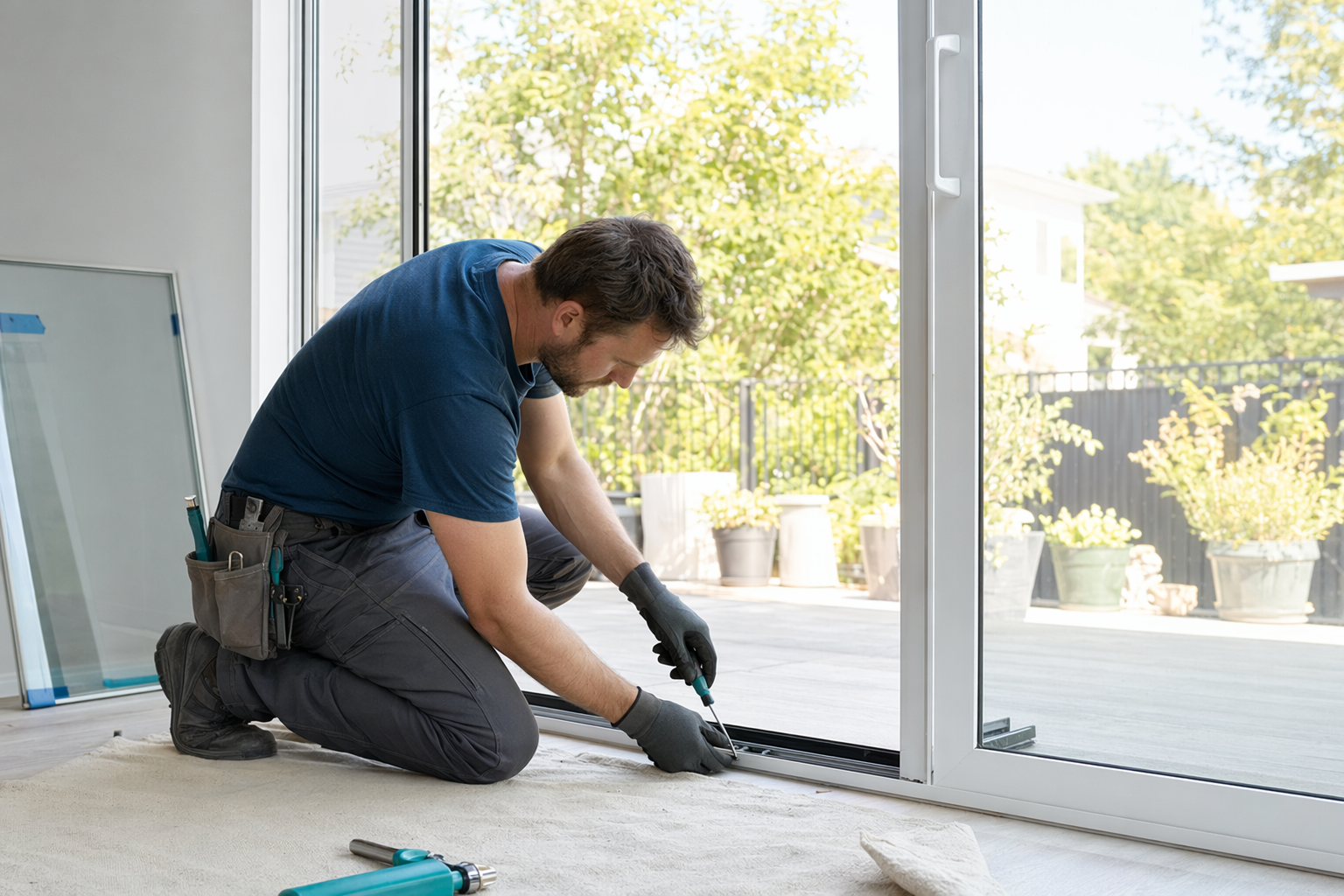
What to do right now
- If the glass is cracked, shattered, or the door feels unsafe, keep people and pets away first. Broken glass can cause serious cuts.
- Do not force the door. Pushing hard can crack the glass, bend the frame, or damage the rollers and track.
- Check for an easy cause: dirt, small rocks, toys, or a damaged screen door blocking the track.
- If there is broken glass or someone is hurt, get first aid or call the local emergency number first.
- If the opening cannot close or lock, you may need temporary help securing it and then a licensed, insured local glass pro. Clearpane is a free matching service and can help you get matched with local pros near you.
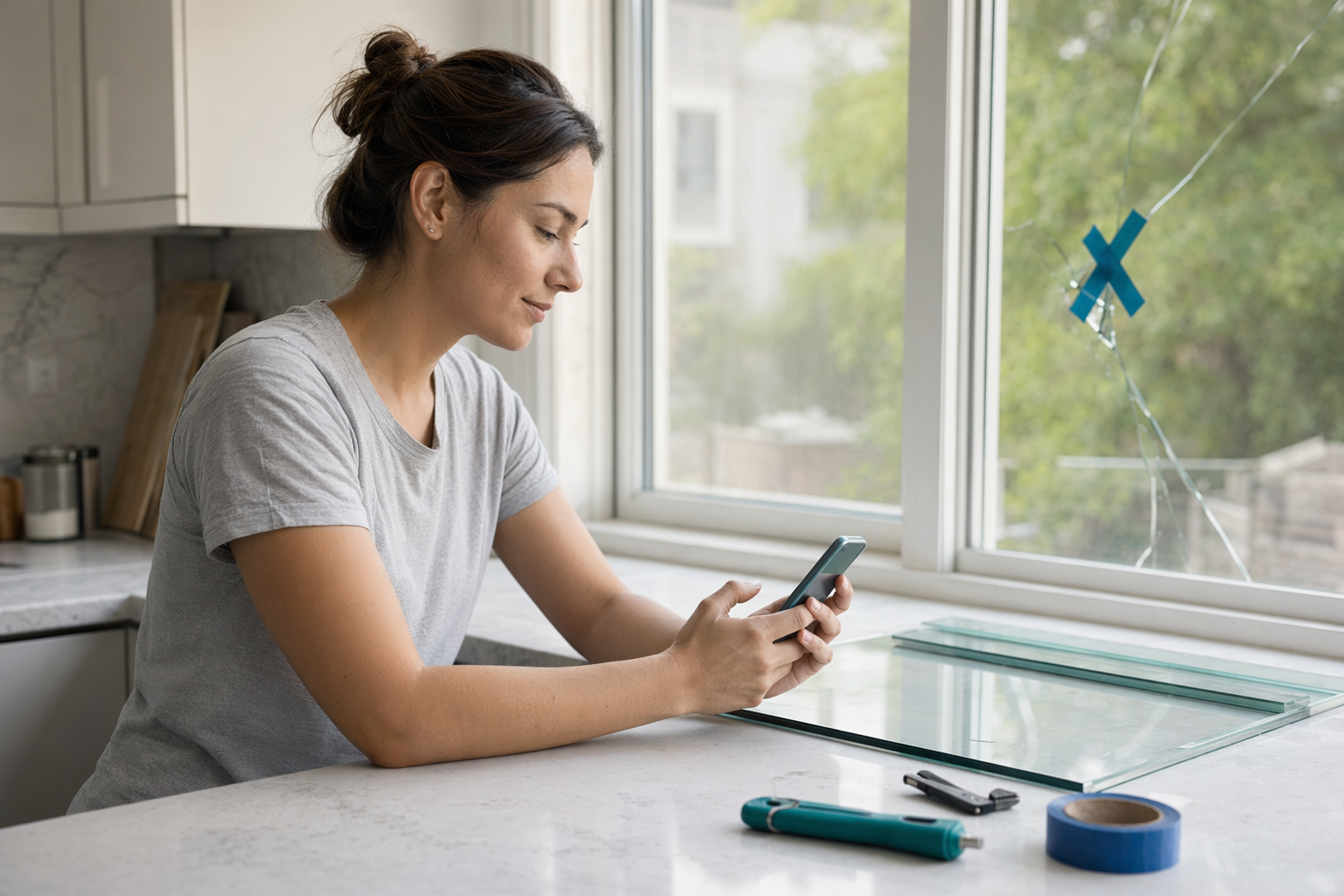
The short answer: why a sliding glass door stops sliding
Most sliding patio doors stop sliding because the bottom track gets packed with dirt and grit, the rollers wear down, or the door shifts slightly and rubs instead of rolling. Sometimes the lock or handle is misaligned, and sometimes the track itself is bent or damaged.
If the door used to move smoothly and now feels heavy, jerky, noisy, or uneven, rollers and track problems are usually the first things to suspect. If the door is very hard to move, drags badly, or looks tilted, it may need adjustment or part replacement.
If the glass is cracked, foggy inside, or loose in the frame, that is a separate issue from the sliding problem, though both can happen at the same time.
Common causes, in plain words
A dirty track is the simplest cause. Dust, pet hair, leaves, sand, and tiny stones collect in the lower track and stop the rollers from moving freely. This is very common in homes with kids, pets, or lots of in-and-out use.
Worn rollers are another common cause. The rollers are the small wheel assemblies at the bottom of the door. Over time they can flatten, rust, seize up, or wear out. When that happens, the door may scrape instead of glide.
Poor alignment can also make a sliding door stick. If the adjustable roller height changes, the frame settles a bit, or hardware loosens, the door may lean and rub one side of the track. A bent track, damaged handle or lock, swelling around the frame, or old weatherstripping can also add friction.
In some cases, the problem is not the slide itself but the glass unit. Many patio doors use double-pane insulated glass. If that unit fails, you may see fog or moisture trapped between the panes. That usually does not directly stop the door from sliding, but it can be a sign the door is aging and should be looked at as a whole.
What you can check before calling for help
You can do a few simple checks without taking the door apart. Look at the bottom track with a flashlight. If you see packed dirt or debris, that may be the main issue. Open and close the screen door too, if you have one, to make sure it is not the part that is sticking.
Listen and feel as the door moves. A scraping sound often points to alignment or roller trouble. A grinding sound can mean dirt in the track or damaged rollers. If the door moves a little and then jams, look for dents in the track or a lock that is catching.
If the glass is damaged, if the door is very heavy and unstable, or if you would need to lift or remove the door to inspect it further, that is usually the point to stop and call a licensed pro. Sliding glass doors are heavy, and some have tempered safety glass that can shatter fully when damaged.
If you are not sure what kind of glass you have, here is the plain version:
- Single-pane glass is one layer of glass. It is more common in older doors or older storm panels.
- Double-pane glass, also called an insulated glass unit or IGU, has two panes sealed together with air or gas between them.
- Tempered glass is safety glass designed to break into many small pieces instead of sharp long shards. It is commonly required by code in doors and other hazardous locations.
- Annealed glass is regular glass that breaks into larger, sharper pieces. A licensed pro can tell you what your door uses and what local code requires.
Repair cost: honest ranges, not quotes
For a sliding glass door that will not slide, the cost depends on what is actually wrong. A simple service visit to clean tracks, adjust the door, or handle a minor roller issue may fall roughly in the $100 to $300 range in some areas. Replacing rollers, locks, handles, or track parts often runs higher, commonly around $200 to $600 or more depending on parts and labor.
If the glass itself is cracked or the insulated double-pane unit is fogged and needs replacement, the cost can rise quite a bit. Replacing only the glass in a patio door may range roughly from $300 to $1,200+, while a larger, tempered, laminated, tinted, or custom double-pane unit can cost more. In some cases, pros may suggest replacing the whole door, but that is not always necessary.
The real number depends on the door size, brand, glass type and thickness, single-pane vs double-pane, tempered vs laminated, hardware availability, whether the track or frame is damaged, and your area. These are not quotes.
If you want a better idea of local pricing, costs can help you understand what affects the final number before you hire anyone.
When to call a licensed glass pro
Call a licensed, insured local glass pro if the door is hard to move after basic cleaning, if it is off-track, if the glass is cracked or fogged, if the lock will not line up, or if the frame or track looks bent. Patio doors are heavy, and work around glass and door alignment can go wrong quickly.
This matters especially for safety glass. Sliding patio doors usually need tempered safety glass by code because they are doors. In some cases laminated glass may also be used. Local codes vary, and a licensed pro should confirm what is required in your area.
If you rent, responsibility may depend on your lease and local rules. Many renters start by documenting the issue with photos and notifying the landlord or property manager in writing.
Clearpane is not a glass company and does not perform glass work. We are a free matching service that helps households connect with licensed, insured local glass pros. We collect only contact and project details like your name, phone, optional email, project type, ZIP, and preferred language. You can get matched or read more help and guides.
- Ask if they are licensed and insured before scheduling
- Get the price in writing before work starts
- Confirm whether they are replacing glass only, parts only, or the whole door
Red flags to watch for
Be careful with vague pricing, scare tactics, and pressure. If someone cannot explain the problem clearly, refuses to put the price in writing, wants cash only, or pushes a full door replacement before checking whether the rollers, track, or glass alone can be repaired, slow down.
A fair pro should explain what failed, what parts are needed, whether the glass is single-pane or double-pane, and whether the door uses tempered safety glass. You should be able to compare quotes, choose who to hire, and confirm the door and glass are installed correctly before paying the final amount.
If possible, ask for a breakdown: service call, labor, parts, glass, and any disposal or emergency fee. That makes it easier to spot overcharging.
A sliding glass door usually stops sliding because of dirt, worn rollers, or poor alignment, and if the glass is damaged or the door feels unsafe, stop forcing it and have a licensed pro check it.
Common questions
Can I use oil or spray lubricant on a sliding glass door track?
Maybe, but it depends on the track and rollers, and using the wrong product can attract more dirt. In plain terms, heavy oily products can make the problem worse over time, so if basic cleaning does not help, a licensed pro is safer.
Why does my sliding glass door feel heavy all of a sudden?
A sudden heavy feeling often means the rollers are worn, jammed with debris, or the door has shifted and is rubbing the track. If the glass is cracked or the door looks tilted, stop forcing it and have it checked.
Does foggy glass mean my sliding door needs to be replaced?
Not always. Fog between two panes usually means the insulated glass unit has failed, and sometimes only the glass unit can be replaced instead of the whole door. A licensed local pro can tell you what is possible.
Is sliding door glass tempered?
Often yes, because doors usually require safety glass by code, but it depends on the door and local requirements. A licensed pro should verify the correct glass type for your home.
How do I know if I need a glass company or a door company?
If the main problem is cracked, shattered, foggy, or failed glass, start with a licensed glass pro. If the issue is mostly framing, structural movement, or major door hardware, the right trade can vary by area.
Should I replace the whole sliding door if it won't slide?
Not necessarily. Many doors can be improved with track cleaning, roller replacement, adjustment, or glass replacement only. Be cautious if someone pushes a full replacement without clearly showing why.