Quick answers
How do I clean up broken glass safely?
If your glass broke, the safest first step is to protect people and stop more damage. Here’s calm, plain guidance for cleanup—then how to get connected with a licensed local glass pro.
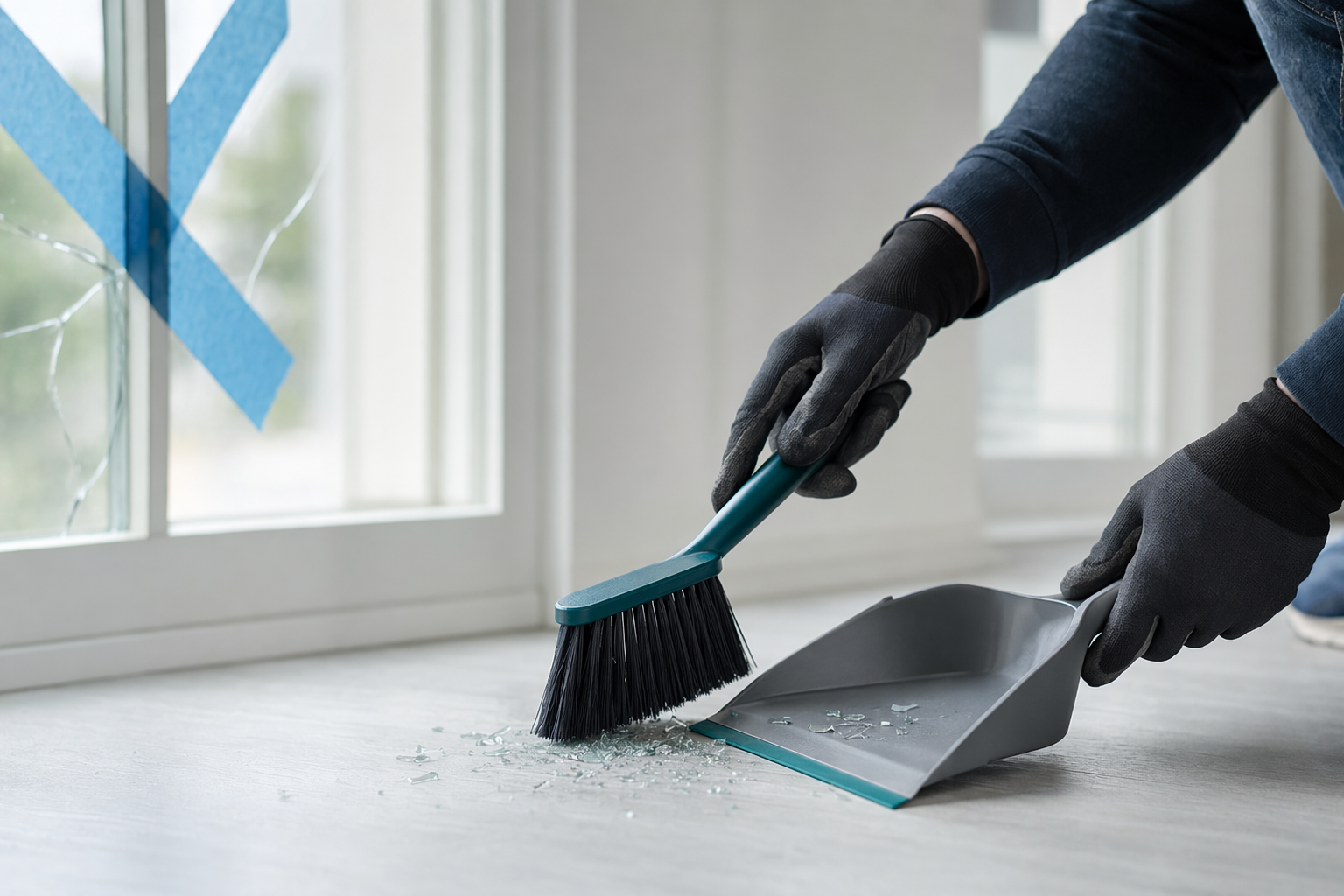
What to do right now (before you clean)
1. Keep people away and limit the area (especially kids and pets).
2. Put on closed-toe shoes and thick gloves if you have them.
3. If anyone is cut, get first aid right away and call your local emergency number if bleeding is heavy or won’t stop.
4. Turn on lights and avoid walking through glass pieces; use a flashlight to spot shards.
5. If the window/door opening is exposed, secure it temporarily (for example, with a sturdy cover) so nothing falls in or out—then get help from a licensed glass pro for the proper repair.
- If glass is still in place, don’t yank it—small pieces can fall while you move them.

How to clean up broken glass safely (step-by-step)
Start with large pieces, then work down to smaller shards. Glass can look “small” but still cut skin, so take it slow and watch your footing.
1. Remove large fragments first by hand only if they’re clearly loose; otherwise, move what you can without pulling on stuck glass.
2. Sweep gently using a broom and a dustpan—don’t grind shards into rugs or floors.
3. For small bits, use masking tape or painter’s tape (press and lift) or a damp paper towel to pick up what the broom misses.
4. Wipe the area with a slightly damp cloth, then check again by looking closely under good light.
5. Place all glass debris in a sturdy container (like a thick cardboard box) and tape it shut. Label it clearly as “broken glass.”
6. Take care with trash: tie off bags securely, and avoid overfilling so shards don’t poke through.
- Avoid vacuuming right away unless the type of vacuum is appropriate—glass can damage some vacuums and spread fine shards.
Clean up different surfaces (glass + common home materials)
Different floors need different care so you don’t spread shards.
- Hard floors (tile, wood, laminate, vinyl): sweep first, then use tape or a damp cloth. Check corners and along the baseboards where pieces collect.
- Carpet or rugs: if glass fell onto carpet, don’t rush—shards can get worked deeper. Pick up visible pieces first, then use tape to lift small bits. After that, consider professional cleaning if you’re unsure all fragments are gone.
- Curtains, upholstery, and bedding: remove and isolate items carefully. If glass got into fabric, consider washing or professional cleaning guidance rather than shaking it out.
If you see persistent tiny specks after cleanup, pause and re-check—people often miss the “almost invisible” pieces.
- If you find glass embedded in carpet, don’t just vacuum and hope—use tape and inspect closely.
When broken glass is more than just “cleanup”
Cleanup is only one part. A broken pane can also be a sign that your window or door needs replacement glass (and sometimes different safety glass types).
Get a licensed, insured glass pro involved if:
- The broken area is in a door, shower enclosure, or a low/large window that could be hit.
- The glass is missing, won’t stay stable, or the opening is exposed.
- The glass is part of an insulated double-pane unit (foggy or failed IGU) and the seal seems damaged.
Red flags that can point to poor work or scams:
- Vague pricing or “final” costs without a clear written breakdown.
- Pressure to replace the entire window when only the glass needs replacement.
- Cash-only requests, no proof of licensing/insurance, or no verification of what glass type will be installed.
- Claims that ignore how the glass is made (tempered/laminated/insulated).
- Tempered or laminated safety glass is commonly required by code for doors, shower enclosures, and many low/large window openings—local rules vary.
Single-pane vs double-pane (IGU) and tempered vs annealed—plain basics
Knowing what kind of glass you have can help you ask the right questions of a licensed pro.
- Single-pane glass: one layer. It’s often found in older windows, some storm panes, or simple table/shelf glass.
- Double-pane / insulated glass unit (IGU): two panes with a sealed space in between. If it looks foggy between the panes, that seal may have failed, and the unit often needs replacement glass (not just “cleaning the fog”).
- Tempered vs annealed (common terms): Tempered glass is made to break into small pieces and is often required for safety-critical locations. Annealed glass breaks more like regular brittle glass and may be used in less critical areas depending on local code.
- Laminated glass: has a layer that holds together when broken. It’s used in some specific safety or impact locations.
A glass pro can confirm what you need based on the existing unit and measurements. If you can, take clear photos (from a safe distance) and note where the glass is located (window, door, shower, table, etc.).
- Fog between two panes usually isn’t dirt—it's typically a failed sealed unit.
How to get matched to a local glass pro (free for your household)
Clearpane helps you connect with licensed, insured local glass pros. We don’t do glass repair ourselves—we only match you with pros for residential home glass work.
To get matched, you share:
- Your contact info (name, phone, optional email)
- Your project type (for example: window glass replacement, foggy double-pane/IGU, shower enclosure glass)
- Your ZIP code
- Your preferred language
Then local pros can contact you with options. The price depends on glass type and thickness, size, whether tempered/laminated is required, and any edge work or seal/installation details—so ranges are helpful, but they’re not quotes.
If you want cost guidance first, see glass repair costs. For getting help quickly, visit get matched. For general support, use help or browse guides.
- Before any work starts: confirm the price in writing, compare options, and check that the glass installed matches what was agreed.
First make the area safe and pick up glass carefully, then use Clearpane (free) to get matched with a licensed, insured local glass pro for the right repair.
Common questions
Should I vacuum broken glass or sweep only?
Start with sweeping and tape/damp cloth cleanup, especially on floors where shards can be missed. Some vacuums can be damaged by glass or may scatter fine pieces—if you’re not sure, avoid vacuuming until you get the right guidance for your specific situation.
Is foggy double-pane glass something I can clean off?
Usually no. Fog between panes is commonly caused by a failed sealed unit, meaning the insulated glass part typically needs replacement. A glass pro can confirm based on what’s actually happening inside the unit.
How do I dispose of broken glass safely?
Put glass debris in a thick container (like a taped, labeled cardboard box) or a sturdy bag that won’t tear easily. Label it clearly as broken glass and keep it secure so shards don’t puncture through.
Do I need tempered glass for my repair?
Often, yes for safety-critical locations like doors and shower enclosures, and sometimes for low/large windows depending on local code. A licensed, insured glass pro can tell you what’s required where you live.
I’m renting—who should handle the glass repair?
It depends on your lease and local rules. In many areas, the landlord handles repairs for windows and similar items, while renters handle immediate safety steps. For your situation, check your lease and local tenant guidance.