Quick answers
How do I board up a broken window?
If a window is broken, the first step is to make the area safe and stable. Then you can temporarily board it up until a licensed, insured glass pro can replace the glass properly.
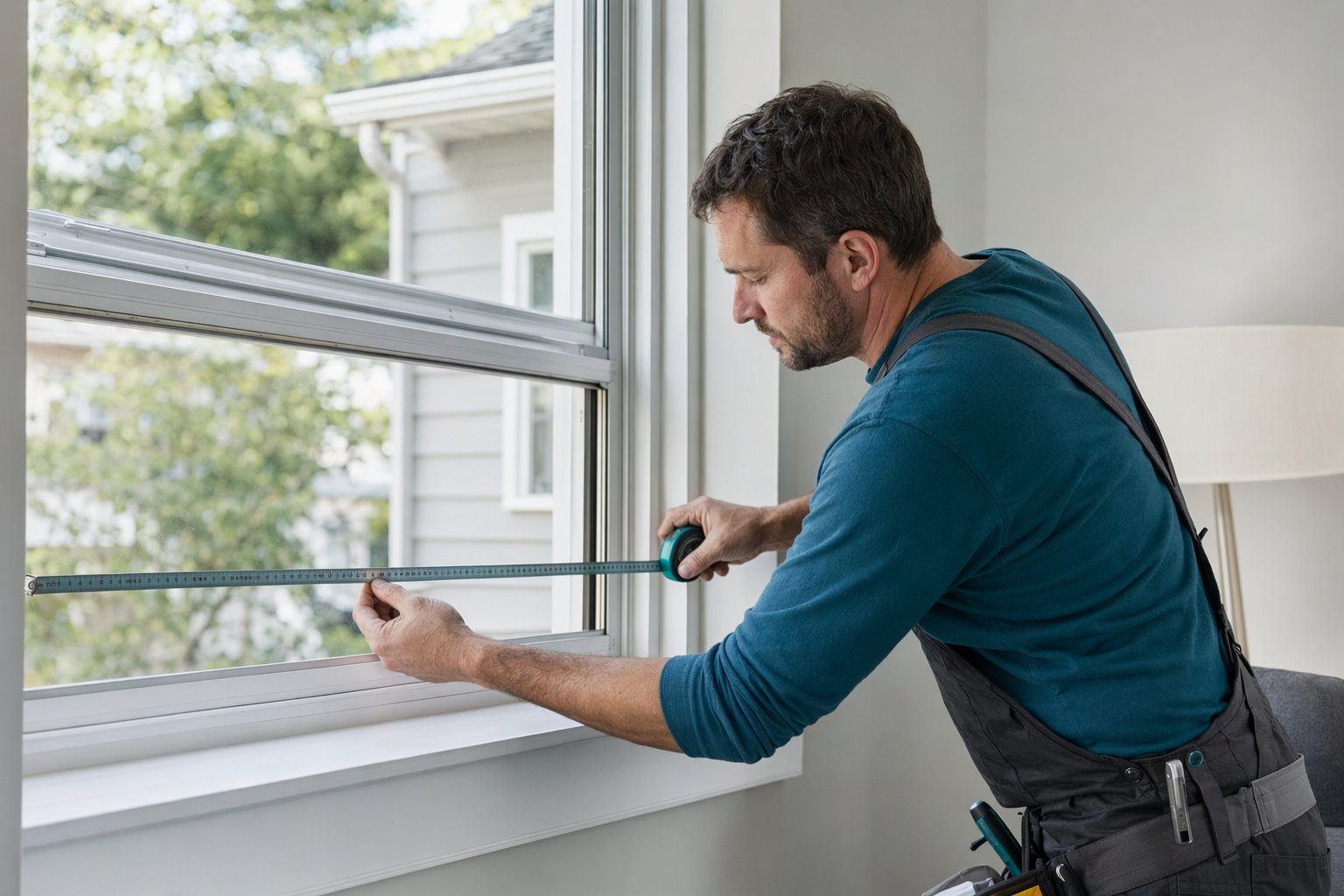
What to do right now (before you board it up)
1. Keep people away and reduce movement near the break (especially kids and pets).
2. If you’re able, wear thick gloves and carefully collect large glass pieces. Don’t sweep into a bare hand.
3. Make the inside and outside area safer: cover sharp edges so you don’t cut yourself when walking by.
4. If anyone is cut or injured, get first aid and call your local emergency number if needed—broken glass can cause serious cuts.
- If the glass fell out or the opening is exposed, the goal is temporary protection—no “perfect” repair.
- If you’re not comfortable handling debris, wait for help (a glass pro, building maintenance, or your landlord).
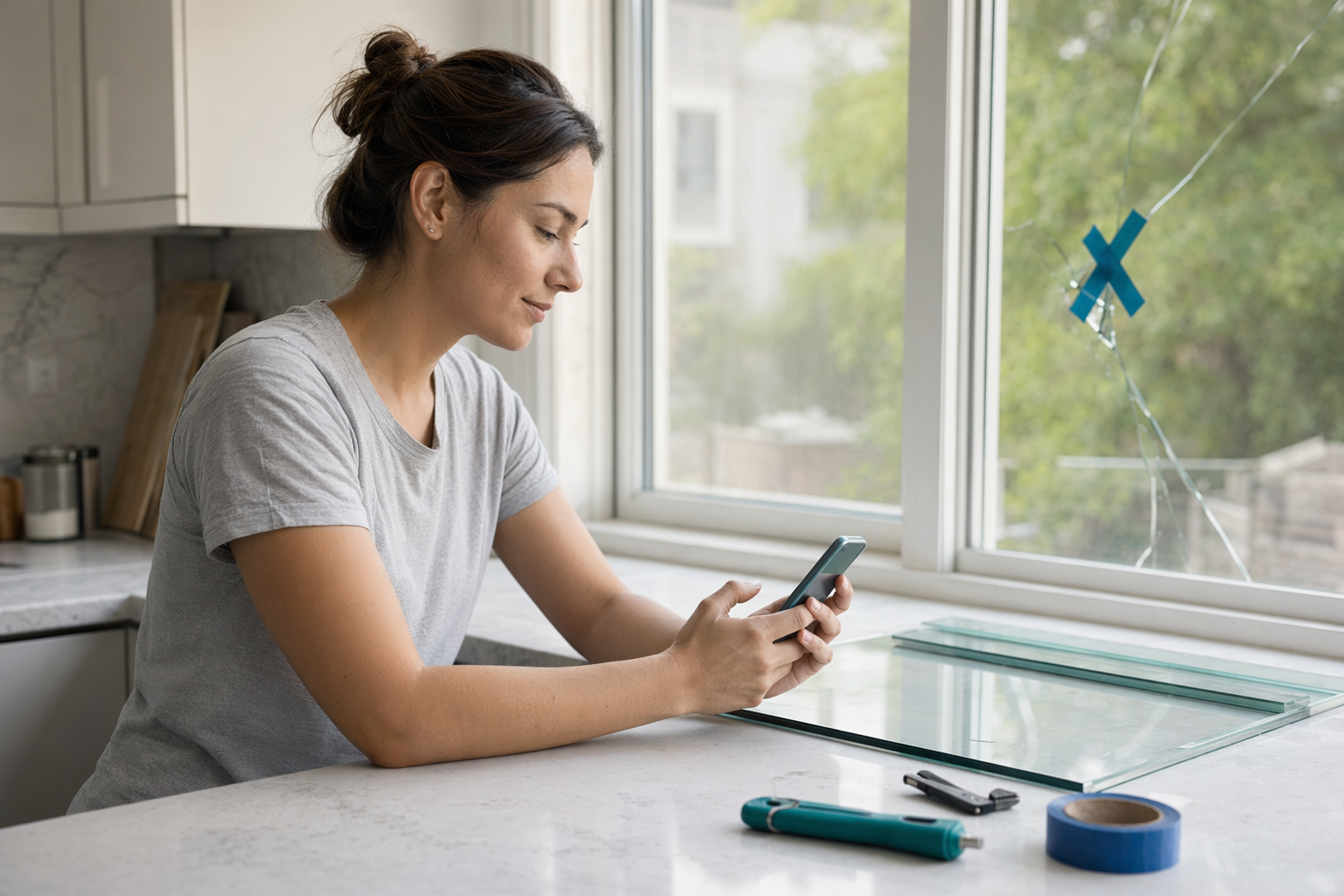
When boarding up helps (and when it’s not enough)
Boarding up is usually a short-term way to reduce weather and security risk after a storm or accident. It’s meant to bridge the time until the correct glass can be installed.
Boarding up does not replace proper glass. A boarded opening won’t have the same insulation, sound control, or safety performance as new window glass.
If the broken window is part of a door, a shower enclosure, or a low/large window, the type of safety glass matters. Local code rules vary by area, so the licensed glass pro should confirm what’s required before final installation.
- If you’re dealing with a foggy insulated double-pane (IGU) window, boarding may not be the right fix—often it’s a sealed-unit repair/replacement issue.
- For rentals, check your lease and notify your landlord or property manager as soon as possible.
How to temporarily secure a broken window opening
General approach: you want a rigid barrier that covers the full opening with minimal gaps. Use materials that can be set in place without pushing against the remaining glass or frame.
You’ll typically do better with two people—one to hold the board and the other to secure it—especially if the opening is awkward.
For the exact method and supplies, follow the instructions that come with the boarding material you choose (or ask a licensed glass pro for their recommended temporary protection steps). The safest goal is “cover and stabilize,” not “force it tight.”
- Avoid stepping on or leaning on remaining glass or thin frame pieces.
- Do not cover a window in a way that blocks emergency exits if your home uses that opening for an escape route—follow local guidance.
Red flags—stop and get help instead
Boarding can be unsafe if the break is complex or the frame is damaged. Get help from a licensed, insured glass pro (or another qualified local provider) if you notice anything that makes the opening unstable.
Stop and don’t force anything if the frame looks loose, warped, or you see the window opening moving. Also avoid cutting or modifying boards while glass debris is still present.
If you’re unsure what type of window you have, boarding is only temporary—verify the glass type and dimensions with a pro so the replacement unit matches how the window is built.
- Loose frame, large cracks spreading beyond the pane, or signs the track/sash is damaged
- Sharp, exposed edges that you can’t safely cover
Know your glass types (plain-language guide)
Windows are usually single-pane or double-pane (also called insulated glass or IGU for an insulated unit). Single-pane is one piece of glass. Double-pane has two panes with a sealed space between them, which helps with insulation.
If a double-pane is foggy, the seal may have failed and moisture or cloudiness can form between the panes. Fixing it usually means replacing the insulated unit (the IGU), not “wiping away” the fog.
Glass can also be different by safety performance. Tempered glass is heat-treated to break into smaller pieces. Annealed glass is slower-cooled and typically breaks into larger, sharper shards. Laminated glass has a plastic layer that helps hold fragments together if it breaks. In many homes and in certain locations (like doors and shower enclosures), safety glass is required by local code.
- Foggy double-pane usually points to an IGU seal issue.
- Door and shower areas often require tempered/safety glass—codes vary.
Cost and how to get matched with a local glass pro (free for you)
Boarding up yourself may be the lowest-cost quick step, but it’s temporary. The cost to replace the glass later depends on what needs replacing: single-pane vs double-pane/IGU, tempered vs annealed vs laminated, the window size, the thickness, and any edge work or special measurements. Labor and local pricing also vary.
As a rough guide, replacing a single-pane glass panel may cost in the hundreds of dollars, while double-pane/IGU replacements often cost more because you’re replacing a sealed unit. Full window replacements (frame + glass) can be higher than glass-only replacement. These are broad ranges—not quotes—and your exact price depends on your window and the glass type required.
Clearpane is a FREE matching service. We do not do the glass repair ourselves (we’re not a glass company or licensed glazier). If you want, you can get connected with licensed, insured local glass pros near you by sharing your name, phone, ZIP code, your project type, and your preferred language via get matched. For more general guidance, see guides or help.
- Ask for the final price in writing before work starts.
- If someone pressures you to replace the whole window when only the glass needs replacing, get a second opinion.
Make the area safe first, use a rigid temporary cover only to protect the opening, and then contact a licensed, insured glass pro for the correct glass replacement—Clearpane can help you find one for free.
Common questions
What should I use to board up a broken window?
Usually people use a rigid, protective panel and secure it in place temporarily so it covers the opening with minimal gaps. Follow the instructions that come with the boarding materials you choose, and avoid pushing on remaining glass or unstable framing. For the safest temporary plan, a licensed, insured glass pro can advise what to do in your specific situation.
Is it okay to tape plastic over broken glass instead of boarding?
Plastic or tape can help with weather exposure, but it’s not the same as a rigid barrier and may not hold up in wind or rain. Boarding (or a similarly protective rigid cover) is typically more effective as a short-term step until a proper glass replacement is done.
How long can I leave a window boarded up?
Boarding is meant to be temporary. The longer it stays, the more likely you’ll run into issues like gaps from movement, more debris, or increased security and weather risks. Aim to get a licensed, insured glass pro scheduled as soon as you can.
My double-pane window is foggy. Do I need to board it up?
Foggy double-pane glass usually means the IGU seal failed. It often doesn’t require boarding—unless there’s cracking, missing glass, or an opening that’s truly exposed. A local glass pro can confirm what’s going on and what the correct replacement is.
Will boarding affect the price of glass replacement?
It can, depending on how the opening and frame look when the pro arrives. If boarding or debris management damages the frame, it may change what needs to be addressed. That’s why it helps to keep the temporary cover simple and avoid forcing anything against the window components.