Quick answers
How much does it cost to replace a foggy double-pane?
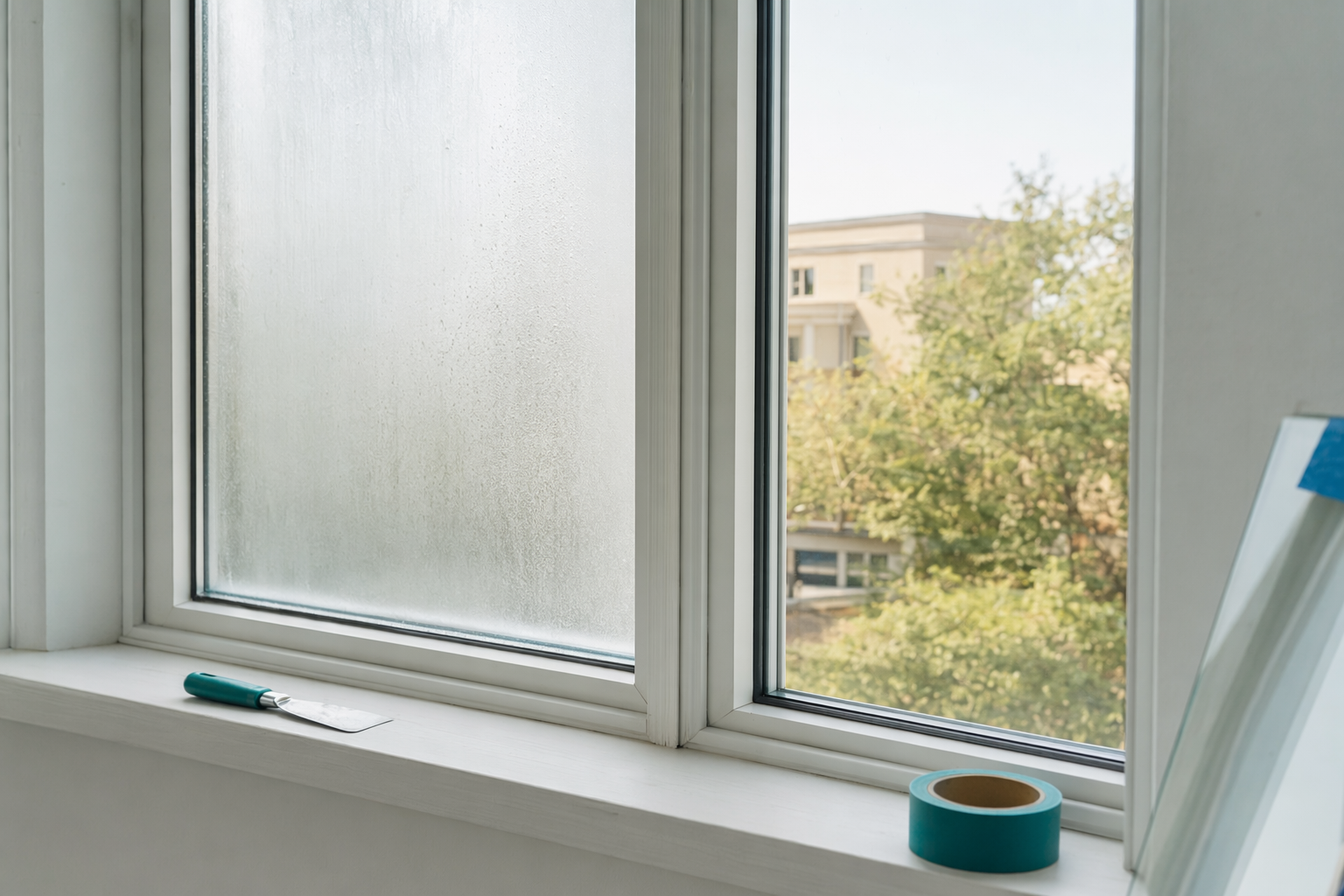
Foggy double-pane windows usually mean the insulating glass (IGU) seal failed. Costs vary, but you can expect a glass-only repair to be less than replacing the whole window—and Clearpane can help you find a licensed local pro for free.
What to do right now (before you price anything)
1. Keep people and pets away from the window area, especially if the glass is cracked or still feels loose.
2. If you must clean up any tiny glass bits, use gloves and a vacuum afterward (don’t sweep dry).
3. Tape plastic or a sheet over the opening to block drafts and keep moisture out—only as a short-term cover until a glass pro checks it.
4. Take a few clear photos (the foggy area, the window size if you can see it, and any markings on the glass). Then get at least 2 written prices before work starts.
- If anyone is cut or hurt, get first aid and call your local emergency number if needed.

Typical cost range to replace a foggy double-pane (IGU)
For a foggy double-pane, many homeowners are really replacing the insulating glass unit (IGU)—the sealed “sandwich” of two panes inside the window frame. Because the exact glass type, size, and edge work vary, there isn’t one fixed price.
In many areas, glass-only IGU replacement often lands around $250 to $800 per unit, with some jobs higher for larger windows, specialty glass, or harder-to-match units. If the frame also needs repair or the old unit won’t come out cleanly, the total can increase.
If your window is part of an insulated system where the glass is integrated with special hardware, you may see higher pricing—so always ask what’s included (glass only vs glass plus removal/reinstallation, and whether any frame parts are involved).
Note: ranges are not quotes. Your final price depends on the glass thickness, whether it’s tempered/laminated, the IGU spacing, and how much work is needed to access and reinstall the unit.
- Ask for a written breakdown: labor + IGU/glass + any materials. Be cautious with vague “lump sum” pricing.
What affects the price the most
The biggest drivers are the glass and the fit. A foggy double-pane can be “standard” (common sizes) or custom (harder to source), and the labor effort changes if the unit is difficult to remove.
Common cost factors:
- Size and shape (large windows and specialty shapes cost more)
- Whether the IGU is standard or custom-made
- Glass type (tempered vs annealed, laminated vs non-laminated)
- Edge work and sealing details needed for a proper fit
- Access and installation difficulty (second-floor windows, tight frames)
If your home uses safety or code-required glass in certain locations (like doors or some low/large windows), the replacement may need to match specific requirements. A licensed, insured glass pro can confirm what’s appropriate for your unit and location.
Single-pane vs double-pane (IGU) and what “foggy” usually means
Single-pane windows are one piece of glass. Double-pane windows (often called “insulated windows”) have two panes separated by a spacer, forming an IGU. When you see fogging or condensation between the panes, that usually means the insulating seal inside the IGU has failed.
When that seal fails, the “between the panes” moisture can’t be removed by wiping from the inside. That’s why the typical fix is replacing the IGU, not just cleaning the glass.
Tempered vs annealed (plain-English):
- Tempered glass is heat-treated so it breaks into small pieces. It’s common in many modern window applications.
- Annealed glass is not heat-treated this way and breaks differently. If your current glass is tempered, replacement typically needs to match.
Laminated glass is made with a plastic layer that helps hold pieces together if it breaks. Some windows use laminated glass for safety, noise reduction, or impact performance.
Because these details affect the product you need, photos of any markings and having the right measurements help your local pro price the job accurately.
How to get an honest price (and avoid common scams)
A reliable glass pro should be able to explain what they are replacing and why, then give a written price before work starts. You stay in control: you confirm the price, compare options, and only pay after the glass is installed.
Red flags to watch for:
- Scare tactics (“Your whole window is dangerous, you must replace everything today”) when only the IGU likely needs replacement
- Cash-only pressure, no written estimate, or unclear “materials/labor” details
- Vague pricing that doesn’t say whether it’s glass-only or includes removal/reinstallation
- Refusing to show proof of licensing/insurance (you don’t have to hire them)
Good practice:
- Get at least 2 written estimates
- Ask if the price includes disposal/cleanup
- Ask whether they will match the original glass type (tempered/laminated) and IGU size
- Confirm the timeline you’re given—and what happens if the unit needs to be reordered
How Clearpane helps (free) and where to start
Clearpane is a free matching service. We don’t do glass work, and we’re not a glass company. We help you connect with licensed, insured local glass pros near you based on your contact info and your project intent.
To get matched, share what you need (foggy double-pane/IGU), your ZIP code, and your preferred language. The glass pro will handle the measurements and confirm the correct glass type for your window.
If you want to learn more about the process, visit How home glass replacement works or start with Find a local glass pro. For more general help, see home glass help. If cost is your main question, also review home glass costs.
- This guidance is general information—not professional advice for your specific window.
Foggy double-pane windows usually mean the IGU seal failed, and IGU replacement often costs about $250–$800 per unit, depending on size and glass type—Clearpane is free to help you find a licensed local pro.
Common questions
Do I have to replace the whole window if my double-pane is foggy?
Not usually. Fog inside the space between panes typically means the IGU seal failed, and many homes only need the IGU (the sealed glass unit) replaced. However, the frame, installation method, or local code can change what’s needed, so confirm with a licensed glass pro.
Why are quotes for foggy double-pane replacements so different?
Prices vary with window size, whether the IGU is standard or custom, the glass type (tempered/laminated), how difficult it is to remove the old unit, and local labor rates. A written quote should clearly state what’s included.
Is it cheaper to repair a double-pane window or buy a new one?
In many cases, replacing the foggy IGU is less expensive than replacing the full window. But if the frame is damaged, the unit can’t be removed safely, or other parts need replacement, the total cost may be closer. Get written estimates to compare options.
Can I reduce the fog by cleaning the window from the inside?
No—fog between the panes usually means the seal failed, so cleaning won’t fix the trapped moisture. The only lasting solution is replacing the sealed IGU. Keep the window covered temporarily if needed for weather protection until a pro replaces the unit.
What should I ask a glass company before they start?
Ask what they are replacing (IGU vs whole window), whether the new glass matches safety requirements (like tempered/laminated when applicable), what the price includes, and to provide a written estimate before work begins. Confirm how cleanup/disposal will be handled.