Quick answers
How much does it cost to replace a broken mirror?
First, make the broken mirror safe. Then you can compare a fair replacement cost — many home mirror jobs are simpler than people fear, but the price depends a lot on size, thickness, edge finish, and whether the mirror is tempered.
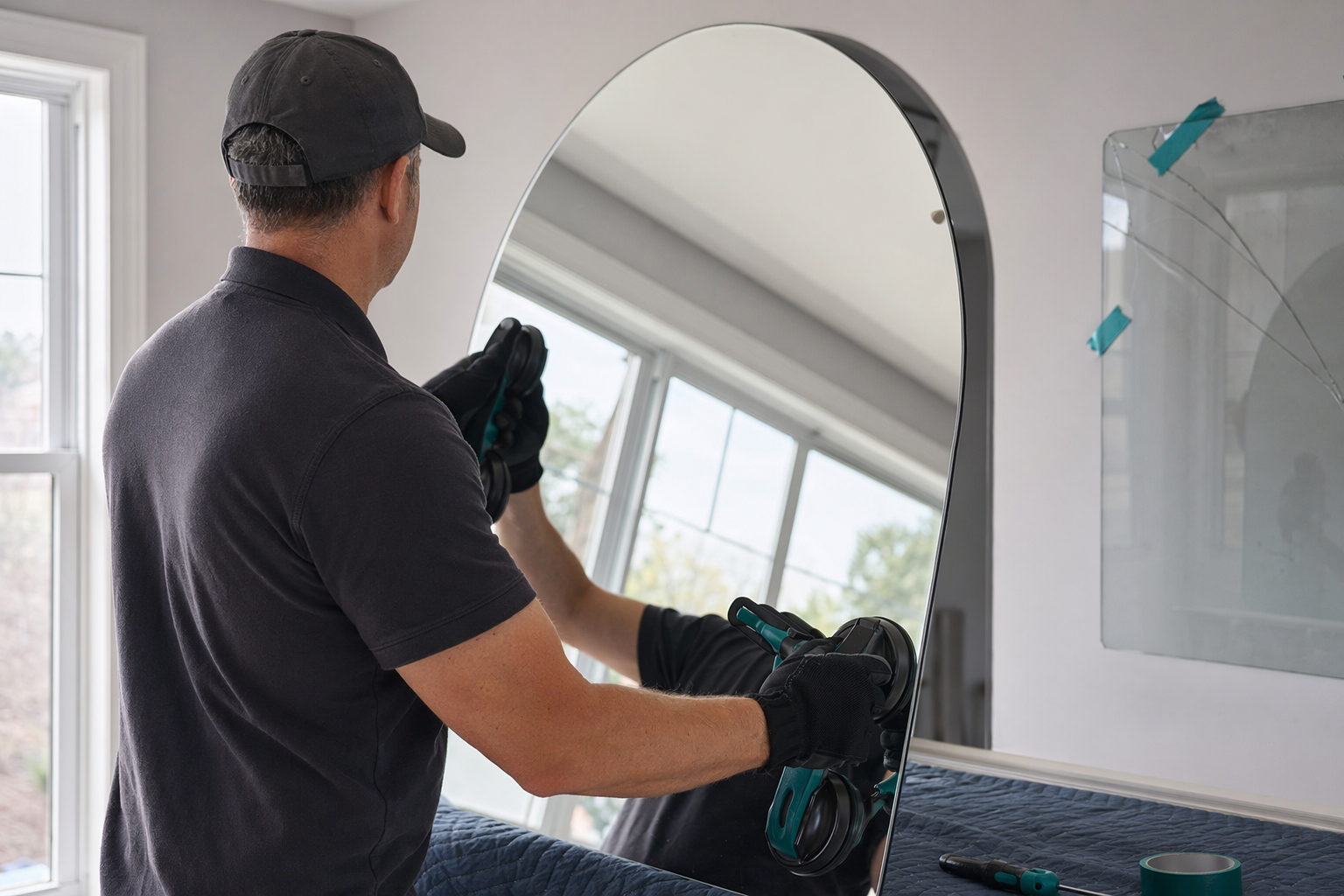
What to do right now
If a mirror is broken, think safety first. Broken glass can cause serious cuts. This is general information only, not safety advice, and if anyone is hurt, get first aid or call your local emergency number first.
- Keep people and pets away from the area.
- Put on closed-toe shoes and sturdy gloves before touching anything.
- Pick up larger pieces carefully and place them in a rigid box or wrap them well before putting them in the trash, if local rules allow.
- Sweep and vacuum small shards from the floor and nearby edges.
- If the mirror is still partly attached to a wall, closet door, or frame, do not pull on it. Keep the area clear and have a licensed, insured glass pro look at it.
- If the broken mirror is in a bathroom, on a door, or attached with mastic or clips, be extra careful — some mirrors are heavier than they look.
If you want help finding someone local, Clearpane can match you for free. Clearpane is not a glass company and does not perform glass work.

Short answer: what broken mirror replacement usually costs
A simple mirror replacement often falls somewhere around $100 to $400 for a smaller basic job, while many medium-size wall mirrors land around $200 to $700. Large custom mirrors, thick mirror glass, polished edges, cutouts for outlets or fixtures, or difficult removal and installation can push the total to $800 or more.
For a framed bathroom mirror, a plain replacement piece may cost less than a custom full-wall mirror. A mirrored closet door panel or a large gym-style wall mirror can cost more because of size, handling, and installation difficulty.
These are only broad ranges, not quotes. The real number depends on the mirror size, thickness, edge work, whether it needs tempering, how it is mounted, your area, and labor. If the installer has to remove old adhesive, work on a high wall, or replace multiple pieces, the price usually goes up.
What changes the price the most
The biggest cost factors are usually size and glass type. A small plain mirror is usually cheaper than a large custom-cut mirror. Thicker mirror glass can cost more than thinner glass, and special finishes or shapes can raise the price.
Edge finish matters too. A basic cut edge is usually less expensive than polished edges, beveled edges, rounded corners, or custom shapes. If the mirror needs holes, notches, or cutouts for lights, outlets, or hardware, that usually adds cost.
Installation method also matters. A mirror set in a frame may be easier than one glued directly to drywall. Removing broken mirror pieces from adhesive can take time and care. If the mirror is on a closet door, sliding door, or another moving surface, the pro may also check the backing, tracks, or door condition.
Location matters. Bathroom mirrors, door mirrors, and low glass near walking areas may need safety glass in some situations under local code. In plain words, annealed glass is regular glass that can break into large sharp pieces. Tempered glass is heat-treated so it breaks into many smaller pieces. Your local licensed glass pro can tell you what is required in your area.
Single-pane, double-pane, tempered, annealed — and where mirrors fit
People sometimes compare mirror replacement to window glass replacement, but they are not exactly the same. A mirror is usually a piece of glass with a reflective backing. Most mirrors in homes are not insulated double-pane units.
Single-pane means one layer of glass. Double-pane, also called an insulated glass unit or IGU, means two panes sealed together with air or gas between them. That is common in windows, not typical wall mirrors. If you are actually dealing with a broken window or foggy double-pane unit, this help page or the guides hub may be more useful.
For mirrors, the more relevant question is often annealed versus tempered. Annealed mirror is standard mirror glass used in many wall applications. Tempered mirror is treated for safety and may be required in certain doors, closets, gyms, bathrooms, or other impact-prone locations depending on local rules. Tempered usually costs more and may take longer to order because it is made to size before tempering.
If you are not sure what type you need, ask for the price in writing for the specific mirror type and thickness. That helps you compare quotes fairly.
When repair may be possible — and when replacement is more common
Most cracked or shattered mirrors are replaced, not repaired. In everyday home use, once the mirror glass is broken, the usual fix is a new mirror cut to fit. Small edge damage may sometimes be manageable if it will be fully hidden by a frame, but many chips and cracks spread or stay unsafe.
If the mirror only looks cloudy, spotted, or black around the edges, that may be deterioration of the reflective backing rather than a fresh break. In many cases, replacement is still the practical option, especially for older bathroom mirrors.
If the broken piece is part of a medicine cabinet, mirrored closet door, or custom wall installation, a pro may look at whether only the glass panel needs replacing or whether hardware, backing, or the full unit also needs work. Be cautious if someone immediately pushes a full replacement without explaining why only the mirror glass would not work.
How to avoid overpaying and find the right local pro
It is smart to get at least two written prices when you can, especially for a custom mirror or a larger installation. Ask what is included: removal, disposal, new mirror thickness, edge finish, tempering if needed, delivery, and installation. A low number can jump later if those items were left out.
Red flags to watch for:
- vague pricing with no written details
- scare tactics or pressure to decide immediately
- cash-only demands
- no proof of license or insurance when your area requires it
- pushing a full replacement of the whole unit when only the glass may need replacing
The household stays in control. You can compare quotes, choose who to hire, confirm the price before work starts, and check that the glass looks right before paying the final amount.
If you want help reaching licensed, insured local glass pros, get matched here. Clearpane is a free matching service for households. We only collect contact and project details such as your name, phone, optional email, project type, ZIP code, and preferred language. We do not collect financial account numbers, Social Security numbers, income, or sensitive records.
You can also read more plain-language cost guides at our costs hub.
- Ask for size, thickness, and mirror type in writing
- Confirm whether removal and disposal are included
- Verify license and insurance if required in your area
- Do not approve work until you understand the total price
A broken mirror often costs about $100 to $700 to replace, but big custom or tempered mirrors can cost more, so make the glass safe first and get written prices before you hire anyone.
Common questions
Is it cheaper to replace a mirror or the whole vanity?
Often it is cheaper to replace just the mirror if the vanity and wall are otherwise fine. The total depends on the mirror size, how it is attached, and whether special safety glass is needed.
Can a cracked bathroom mirror be repaired instead of replaced?
Usually, no. Most cracked mirrors are replaced because the glass and reflective backing are damaged, and cracks can spread.
How much does a custom cut mirror cost?
Many custom mirror jobs start a few hundred dollars and can go much higher for large sizes, polished or beveled edges, cutouts, thicker glass, or tempered mirror. The best way to compare is to get the details in writing.
Do I need tempered mirror glass?
Sometimes. Doors, some bathroom areas, and other impact-prone locations may require safety glass under local code. A licensed local glass pro can tell you what is required where you live.
Who pays for a broken mirror in a rental?
It depends on your lease, the cause of damage, and local rules. If you rent, tell the landlord or property manager promptly and ask how they want to handle it.
Can Clearpane replace my mirror?
No. Clearpane is not a glass company and does not do glass work. It is a free service that helps connect households with licensed, insured local glass pros.