Guides
Tempered vs annealed vs laminated glass
If you’re trying to replace or repair glass at home, the first thing to know is that not all glass is the same. Tempered, annealed, and laminated glass break differently and are often used in different places, which affects both safety and cost.
What to know first
If glass is broken right now, make the area safe first: keep people away, wear shoes, and clean up loose pieces carefully. If anyone is cut, get first aid or call your local emergency number first.
Clearpane is a free matching service, not a glass company. We do not do the repair work ourselves, but we can help you get connected with licensed, insured local glass pros for home glass jobs.
The simple rule is this: the right glass depends on where it goes and what the code or product call for. A licensed glass pro can look at the opening, measure it, and tell you whether the replacement should be tempered, laminated, or regular annealed glass.
- Keep kids and pets away from broken glass.
- Do not guess the glass type if the opening is a door, shower, or low window.
- Get the price in writing before work starts.

Tempered glass: stronger and made to break into small pieces
Tempered glass is heat-treated to be stronger than regular glass. When it breaks, it usually shatters into many small pieces instead of long sharp shards, which is why it is commonly used where people may bump into it.
You often see tempered glass in shower doors and shower enclosures, many exterior doors, sliding patio doors, and some low windows or other areas that code treats as safety glass locations. The exact rules vary by area, so a local pro should confirm what is needed.
One important point: tempered glass cannot usually be cut or changed after it is made. If the size is wrong, the pro usually needs to order a new piece made to fit.
- Common in showers, doors, and other safety-glass spots.
- Breaks into small pebble-like pieces.
- Usually must be replaced, not trimmed on site.
Annealed glass: basic regular glass
Annealed glass is the basic type of flat glass used in many homes. It is not heat-strengthened the way tempered glass is, so it is usually less expensive.
When annealed glass breaks, it can make larger, sharper shards. For that reason, it is not the right choice for every spot in a home. A pro may use it in some picture windows, shelves, tabletops, or other places where code does not call for safety glass, but that depends on the application.
If you’re replacing broken glass and you are not sure what was there before, do not assume regular glass is fine everywhere. Doors, shower areas, and some low or large windows often need safety glass by code.
- Usually the least expensive glass type.
- Breaks into sharper shards.
- Not always allowed where safety glass is required.
Laminated glass: two layers with a sheet in between
Laminated glass is made from two pieces of glass bonded together with a plastic layer in the middle. If it breaks, the pieces often stay attached to that inner layer instead of falling apart right away.
That makes it useful where people want better safety or a bit more hold-together behavior after impact. It is commonly used in some windows, doors, and places where extra security or impact resistance matters. In some homes, laminated glass may also help with noise or added UV filtering, depending on the product.
Laminated glass is often more expensive than basic annealed glass, and sometimes more than tempered glass, but the exact price depends on the size, thickness, edge work, and your area.
- Has a plastic layer between two glass sheets.
- Can stay in place after breaking.
- May cost more than basic glass.
How to tell the difference in plain words
A homeowner usually cannot tell with complete certainty just by looking. Still, there are some clues.
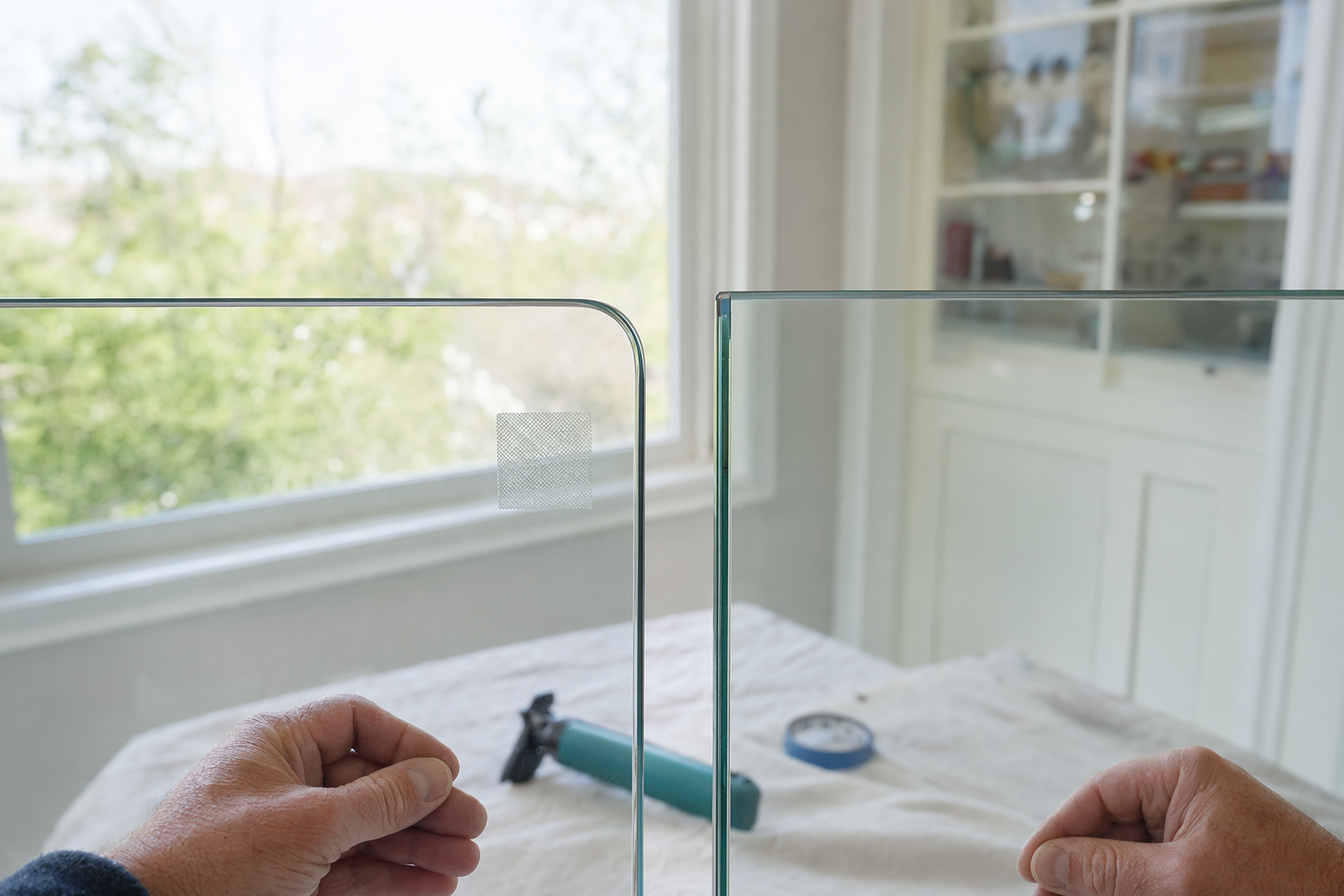
- Tempered glass often has a small etched mark in a corner, but not always where it is easy to see.
- Laminated glass may look like it has a slight inner layer or edge line.
- Annealed glass usually has no special safety marking and is the plain basic option.
If the glass is broken, foggy, or missing from a door, shower, or low window, it is better to have a licensed glass pro identify it than to guess. The wrong replacement can cause a code problem or a safety problem, and it may waste money if the piece has to be redone.
- Look for a corner mark, but do not rely on it alone.
- Do not try to cut tempered glass.
- When in doubt, ask a licensed, insured glass pro to identify it.
What this means for repair cost and getting help
Glass type matters a lot for price. In general, basic annealed glass is often the lowest-cost option, tempered glass costs more, and laminated glass can cost more still. Double-pane/IGU units also cost more than single-pane because they are a sealed unit and may need full replacement of the insulated glass unit, not just one pane.
A rough home-repair range for simple glass replacement can be a few hundred dollars for smaller, straightforward jobs and more for larger, custom, safety, or insulated units. But that is only a range, not a quote. The real number depends on the glass type and thickness, the size, edge work, whether it is single-pane or double-pane/IGU, and the local market.
Watch for red flags: vague pricing, scare tactics, cash-only demands, no license or insurance, or pressure to replace the entire window frame when only the glass needs replacement. Ask for the price in writing, compare quotes, and choose who to hire.
If you want help finding a local pro, use get matched or start with the general guides. You can also review repair options and cost basics before you decide.
- Get the price in writing first.
- Verify license and insurance.
- Confirm the glass is installed correctly before paying the final amount.
Tempered, laminated, and annealed glass all look similar, but they break differently and are used in different places, so a licensed glass pro should match the right type before you replace it.
Common questions
Is tempered glass always required in a home?
No. It depends on where the glass is and local code. It is commonly required in doors, shower enclosures, and some low or hazardous locations, but a licensed local pro should confirm.
Can I replace tempered glass with regular glass to save money?
Not if the location requires safety glass. Regular annealed glass is cheaper, but it may not be allowed in doors, showers, or other code-required spots.
Why is my double-pane window foggy?
Usually the seal in the insulated glass unit has failed, so moisture got between the panes. In many cases the glass unit is replaced, not the whole window, but a pro needs to confirm.
Can Clearpane fix my glass?
No. Clearpane is a free matching service that helps connect households with licensed, insured local glass pros. We do not perform the glass work ourselves.