Guides
Repair the glass or replace the whole window?
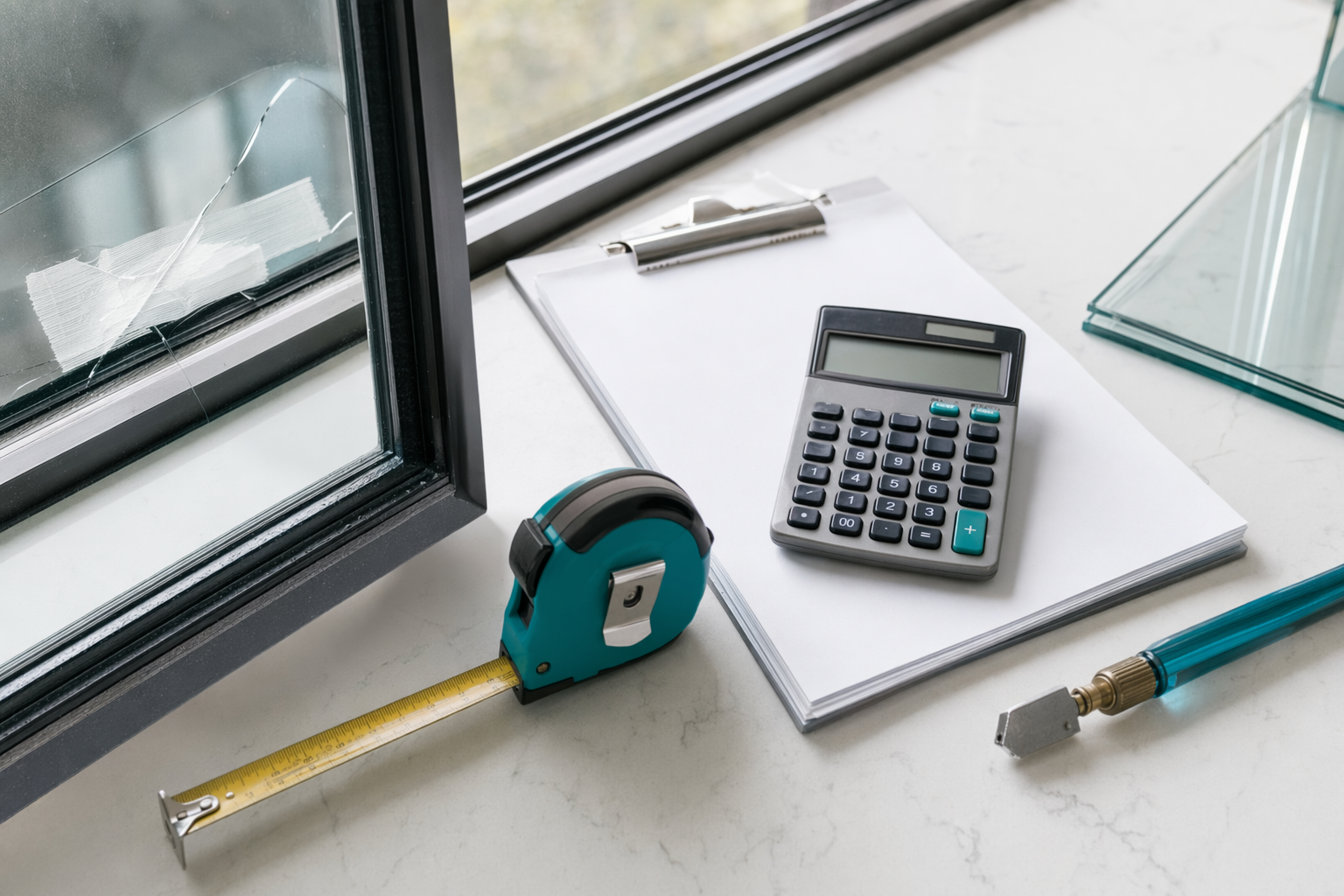
If your home glass is broken or looks foggy, you might only need a glass repair—but sometimes replacing the whole window unit is the smarter choice. Here’s how to decide calmly, without getting upsold.
What to do right now (before you decide repair vs replace)
1. Make the area safe: keep people and pets away, and wear shoes/closed-toe footwear if you must approach the glass.
2. If there’s an injury or the glass is stuck to skin, get first aid right away and call your local emergency number if needed.
3. Clean up carefully: use thick gloves and cardboard/tape to pick up small pieces—don’t sweep loose shards through rugs where they can spread.
4. Secure the opening temporarily: cover the opening with a rigid board or plastic sheeting and tape it so it won’t flap in wind. This is temporary until a licensed, insured glass pro can take a proper look.
- If the glass is in a door, shower enclosure, or a low/large window, you may need specific safety glass (like tempered). A pro can confirm what code requires in your area.

Quick answer: when repairing the glass is usually the better move
In many homes, the frame is fine and only the glass is damaged or failed. In those cases, replacing the glass itself (instead of the whole window) can cost less and keep the original frame, trim, and weather seals.
Repair is often the best choice when the window frame looks straight and solid, the problem is clearly limited to one pane (broken glass) or one sealed unit (foggy insulated glass), and the opening works normally (it opens/closes and doesn’t leak badly).
For foggy double-pane units (also called insulated glass units or IGUs), repair usually means replacing just the failed sealed glass unit—not the whole exterior window—if the frame and spacer system can accept a new IGU.
- Examples that often point to glass-only replacement: one pane is broken, one IGU is fogging/failed, or the frame and hardware still work well.
When replacing the whole window unit may be smarter
Sometimes replacing the whole window is the more practical spend because the issue is bigger than the glass. This can include warped or damaged frames, chronic air or water leaks, broken hardware, or a window that no longer seals correctly.
Whole-window replacement may also be a better option if you’re dealing with older units where the original glass size, system type, or measurements don’t match what’s available today. A glass pro or window professional can measure and explain what’s possible for your specific window.
Another reason to consider replacement: if more than one component is failing (for example, the glass failed and the seals or frame are already worn). In those situations, glass-only may not fully fix the comfort or drafts you’re feeling.
- Examples that often point toward whole-window replacement: visible frame damage, persistent leaks/drafts, failing locks/hinges, or multiple panes/sections needing work.
Glass types, explained simply (this affects repair vs replace)
Single-pane glass is one layer. It’s common in older windows, some garage windows, and many interior glass panels. If a single pane breaks, it’s often replaced directly, assuming the frame and glazing method can be matched.
Double-pane (insulated) glass is two layers separated by a spacer. If it’s foggy between the panes, that usually means the sealed unit failed. You normally replace the sealed IGU (the unit with the two panes) rather than trying to “defog” it.
Tempered vs annealed: Tempered glass is stronger and breaks into small pebble-like pieces. Annealed glass breaks into sharper shards and is more common for some non-safety uses. In many homes, tempered or other safety-rated glass is required for doors, shower enclosures, and certain large/low windows.
Laminated glass has an inner layer that helps hold it together if it breaks (often for impact resistance or noise control). The right type matters for both safety and whether glass-only replacement will work with your existing frame and code requirements in your area.
- Foggy “between the panes” usually = a failed sealed IGU.
- Safety glass requirements vary by location and glass location—ask a licensed, insured pro to confirm what applies to your window/door/shower.
Cost reality check: glass-only vs whole window (honest ranges)
Cost depends on your glass type, size, thickness, edge work, and how complicated the unit is to remove and reinstall. It also depends on whether you’re replacing a single pane, an IGU, or an entire window system.
As a general guide (not a quote), glass-only replacements can range from a few hundred dollars for smaller, simpler repairs to well over $1,000 for larger units, specialty glass, or difficult access. Foggy double-pane/IGU replacements may land in a similar range, but the exact number can vary a lot based on the IGU size and whether the spacer system and measurements match.
Whole-window replacement can be higher because it includes the frame and installation. In many areas, homeowners often see costs that range from the low hundreds to several thousand dollars per window depending on size, material (vinyl/wood/metal), insulation options, and labor.
Important: ranges are not quotes. Get itemized pricing and written confirmation of what is being replaced (glass only vs IGU vs full unit) before anyone starts.
- Avoid pressure: if someone pushes you to replace the entire window when only one pane/IGU failed, ask why—then get a second written option.
Red flags to watch for (and how to avoid overpaying)
When you’re stressed after a break or a foggy window failure, it’s easy to accept the first “fix.” Don’t. You can ask simple questions and still stay polite.
Red flags include vague pricing (“I’ll figure it out later”), cash-only demands, no proof of licensing/insurance, or insistence that you must replace the whole window without explaining the cause and options. Another red flag is not providing written details like what exact glass/IGU type will be installed and whether tempered/safety glass is required for that location.
Stay in control: ask for two written options if you can—(1) glass-only/IGU replacement and (2) whole-window replacement—then compare. Confirm the glass type, measurements, and workmanship before paying the final amount. If you’re a renter, also check your lease and local rules about who handles glass repairs, and what documentation (photos, receipts) you may need.
- Get the price in writing first.
- Verify the glass pro is licensed and insured for your area.
How Clearpane helps you decide the right path (free matching)
Clearpane is a FREE matching service. We connect you with licensed, insured local glass pros who can evaluate your specific window or glass issue and explain whether glass-only replacement or whole-window replacement makes sense.
To get matched, share only contact details plus your project intent: what kind of glass problem you have (broken pane, foggy IGU, shower door/enclosure, cracked mirror, glass tabletop/shelf, sliding patio door, storm/screen pane, or emergency board-up), and your ZIP code and preferred language.
After you’re connected, you stay in control. You confirm the scope and price before work starts, and you can compare options to avoid overspending.
- Start here: [Find a local pro](/get-matched/).
- Learn more: [Glass repair basics](/repairs/) and [home glass costs](/costs/).
Decide repair vs replace based on whether the frame and seals are still good—often you can replace just broken glass or a failed IGU, and Clearpane can help you connect with a local licensed pro to explain your options for free.
Common questions
Should I replace just the glass if my window is old?
Often you can replace just the glass (or the sealed IGU) if the frame is still solid and the measurements can be matched. But older windows may have unique dimensions or mounting systems, so a pro should confirm whether a glass-only repair will fit and seal properly in your specific frame.
My double-pane window is foggy. Is that repairable?
Fog between the panes usually means the sealed unit failed. In most cases, it’s replaced as an IGU rather than repaired. Whether you replace just the IGU or the whole window depends on the frame condition and how well the new unit can be installed.
How do I know if I’m being upsold to replace the whole window?
Ask for written options and a clear explanation of why each option is recommended. If the frame appears fine and only one pane/IGU failed, glass-only replacement may be possible—without guaranteed pricing, a licensed pro can still explain the trade-offs based on your measurements and local requirements.
What safety glass do I need for a door or shower enclosure?
Requirements vary by location and where the glass is used. Many door and shower applications require safety-rated glass (such as tempered and/or specific standards). A licensed, insured glass pro can confirm what applies and what can legally be installed.
Do I need to call a glass pro right away?
If the glass is broken or the opening isn’t secure, yes—make it safe first, then contact a pro promptly so it can be boarded/covered properly and repaired with the correct materials. If anyone is injured, get first aid and call emergency services if needed.