Guides
How to measure for replacement glass
Need replacement glass measurements? Start with safety, then measure the visible glass and the full opening carefully. A few simple checks can help your quote be closer and the final fit be right.
What to do right now if the glass is broken
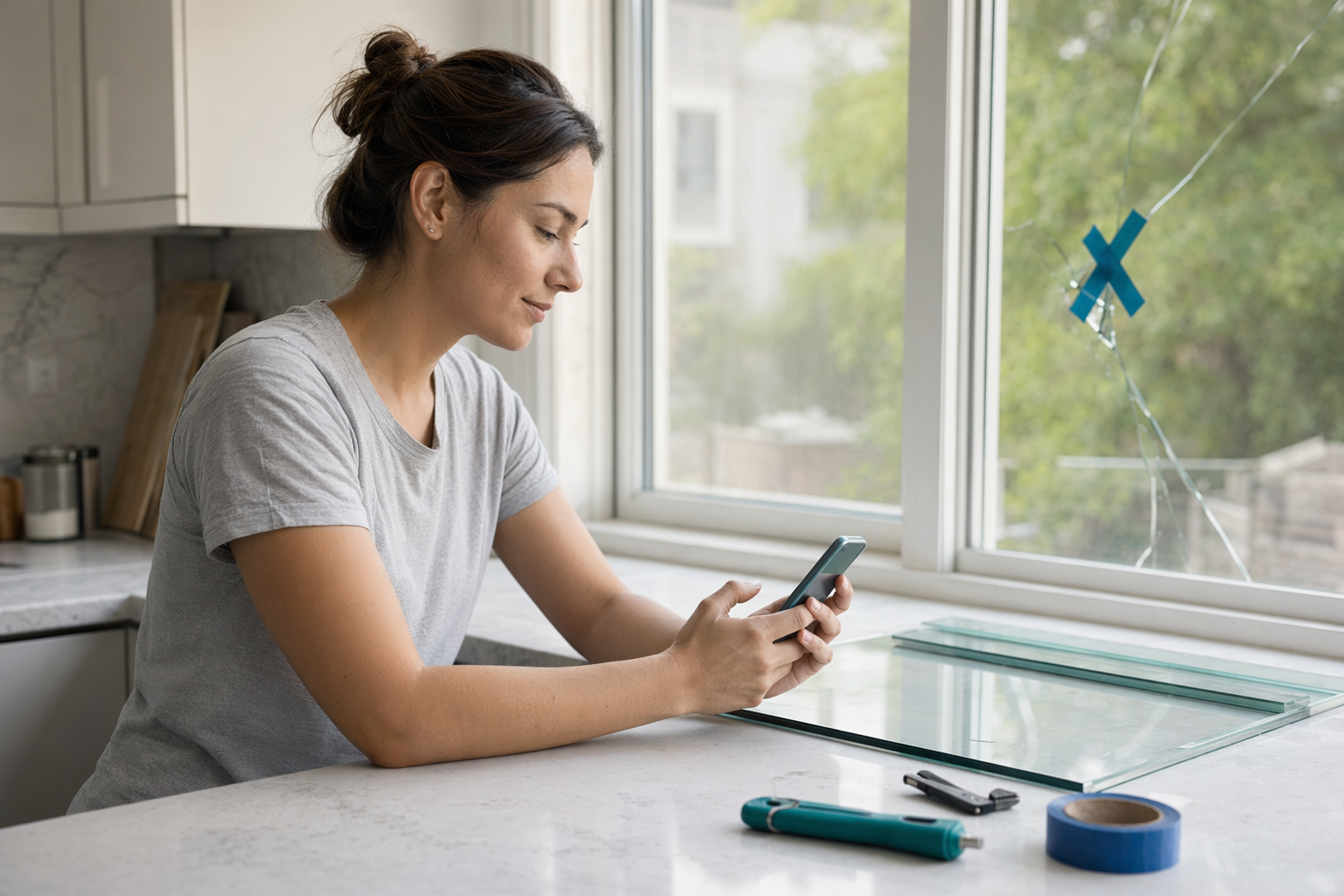
If the glass is cracked, shattered, or loose, make the area safe first. Measuring can wait a few minutes.
- Keep people and pets away from the area.
- Put on closed-toe shoes and sturdy gloves if you need to go near broken glass.
- Pick up large pieces carefully and place them in a thick box or wrap them before putting them in the trash, if allowed in your area.
- Vacuum tiny pieces from the floor, sill, and nearby fabric.
- If there is an open window or door, cover it temporarily from the weather if you can do so safely.
- If someone is cut, get first aid or call the local emergency number first.
This page is general information only, not glass or safety advice. If the glass is in a door, shower, patio door, or a large low window, safety glass may be required by local code, so a licensed, insured glass pro should confirm what is needed.
The short answer: what to measure
For most home glass, you want three things: width, height, and glass type. If you can, also note thickness, edge style, and where the glass is installed.
For a quote, many glass pros can start with approximate measurements. For the final piece, they usually want exact measurements or they will come measure it themselves. That is often the safest choice for a broken window, double-pane unit, shower door, mirror, or tabletop.
In plain words:
- Width = left to right
- Height = top to bottom
- Thickness = how thick the glass is
- Glass type = single-pane or double-pane, and whether it is regular annealed glass, tempered safety glass, or laminated glass
If you are unsure, say that clearly when asking for help. Clearpane is a free matching service, not a glass company, and we do not perform glass work. We can help you connect with local licensed, insured glass pros through get matched.
- Measure in inches
- Measure each opening separately
- Do not assume two windows are exactly the same
How to measure a window pane
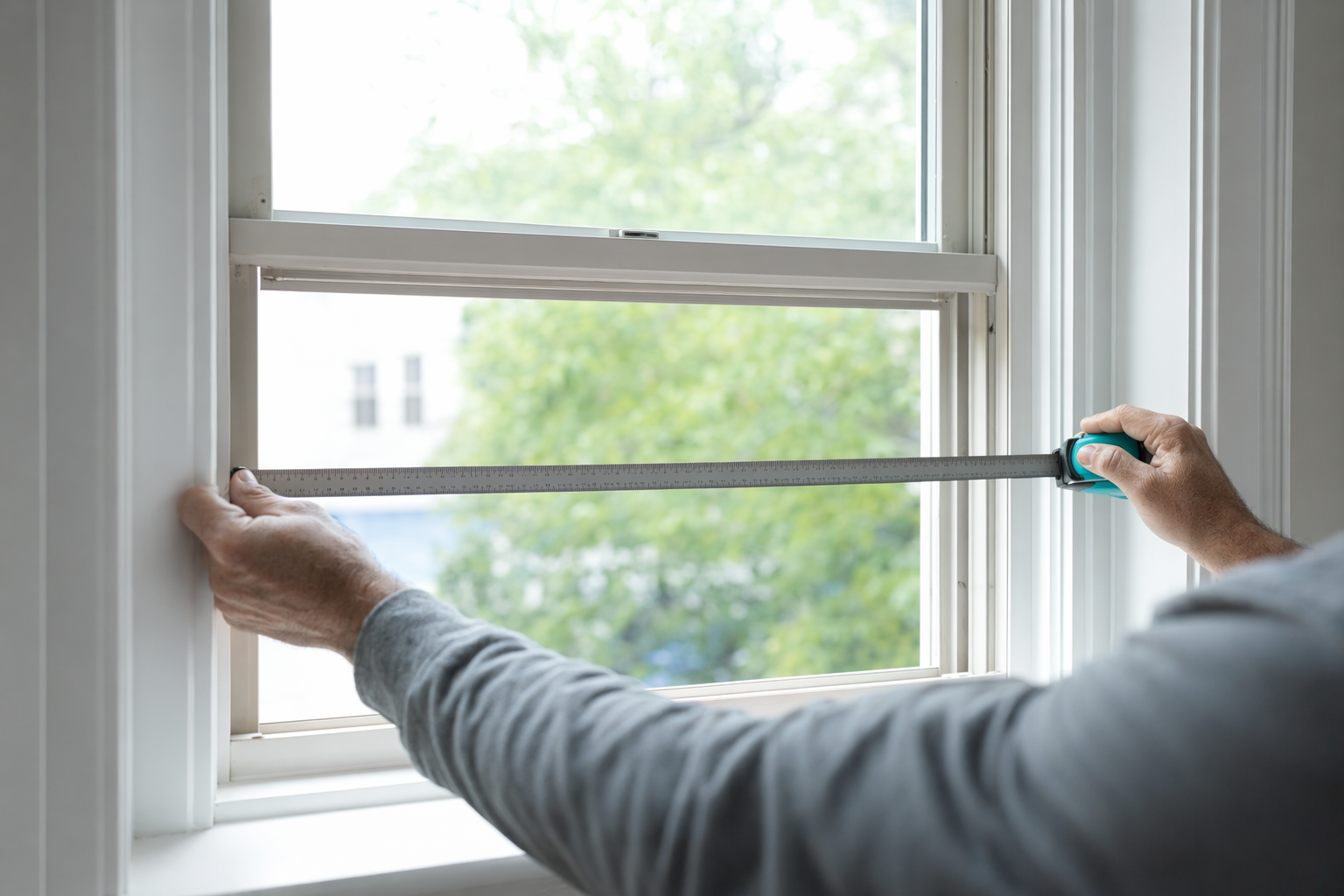
If the window is intact, measure the visible glass first: width and height of the part you can see. Then note the full sash or frame opening if you can access it safely. A glass shop may ask for both because the visible glass is smaller than the actual piece that sits inside the frame.
If the glass is broken but the frame is still there, do not reach into sharp edges. Measure the inside of the opening from gasket to gasket or stop to stop if that is visible and safe to reach. Measure in at least two places for width and two places for height, because older frames are not always perfectly square. Use the smaller number when giving an approximate opening size unless a pro tells you otherwise.
For a double-pane insulated unit, also called an IGU, the full sealed unit thickness matters. Foggy glass between panes usually means the sealed unit has failed, not just a surface cleaning problem. In that case, the replacement is often the insulated glass unit, not the whole window frame. Be careful with anyone who immediately pushes full window replacement without explaining whether glass-only replacement is possible.
If there is a label, stamp, or etching in a corner, take a photo. That can help identify tempered glass, low-E coating, manufacturer markings, or the glass pack details. More repair basics are in repairs and broader home-glass help is in guides.
How to measure a tabletop, shelf, or mirror
For a glass tabletop, shelf, or mirror, measure the full finished size you want, not just the furniture under it. Measure width and height at the longest points. If the shape is not a plain rectangle, make a simple sketch and mark each side.
Thickness matters more than many people expect. A small shelf may use thinner glass than a large tabletop, and a bathroom mirror may need a different edge finish than a closet mirror. If the old piece is intact, use a ruler or caliper to estimate thickness. Common home glass thicknesses are often around 1/8 inch, 3/16 inch, 1/4 inch, and thicker for some tabletops or shelves.
Edge work also affects fit and price. A cut edge is basic. Seamed, polished, beveled, rounded corners, and drilled holes usually cost more. If the glass sits inside clips, channels, or a metal frame, measure the space those hardware parts allow. If you are replacing a shelf or tabletop because it broke, ask a pro whether tempered safety glass is a better choice for the replacement.
Glass types in plain English
Single-pane glass is one layer of glass. Double-pane glass is two layers sealed together with air or gas between them for insulation. If you see fog or moisture trapped between panes, that usually points to a failed insulated unit.
Annealed glass is standard glass. It can break into sharp, dangerous pieces. Tempered glass is safety glass that is heat-treated so it is stronger and usually breaks into many smaller pieces. Laminated glass has a plastic interlayer that helps hold the glass together when cracked.
Why this matters for measuring: a replacement quote depends on more than width and height. The real number depends on the glass type and thickness, the size, edge work, and your area. Doors, shower enclosures, patio doors, and some low or large windows commonly require safety glass by code. A licensed glass pro should confirm what is required locally.
What replacement glass may cost
For simple residential glass, rough price ranges can help you plan, but they are not quotes. A small basic single-pane replacement may sometimes start around $100 to $300 installed in some areas. A double-pane insulated glass unit is often more, commonly around $200 to $600 or more depending on size, coating, and thickness. Tempered glass, laminated glass, polished edges, custom shapes, shelves, mirrors, shower glass, and tabletops can run higher.
Emergency service, hard-to-reach windows, and custom orders can also raise the price. If the frame, sash, hardware, or tracks are damaged, that may be a separate cost from the glass itself.
The honest approach is to get the price in writing first and compare quotes. Watch for vague pricing, scare tactics, cash-only demands, no proof of license or insurance, or pressure to replace the whole window when only the glass may need replacing. You stay in control: confirm the price before work starts, compare options, and check the finished glass before paying the final amount.
You can read more about common price ranges on costs.
When to measure yourself, and when to call a pro
A simple mirror, shelf, or small tabletop can sometimes be measured by a careful homeowner. But for broken windows, double-pane units, shower doors, sliding patio doors, or anything that may require tempered safety glass, it is usually smarter to have a professional verify the final measurements.
That is especially true if the opening is out of square, the frame is damaged, the old glass is missing, or the piece has holes, notches, curves, or polished edges. A small measuring mistake can mean a pane that does not fit.
If you want help finding someone local, Clearpane can help you connect with licensed, insured glass pros near you. The service is free for the household. We only collect contact and project details like your name, phone, optional email, project type, ZIP code, and preferred language. If you are ready, you can get matched.
- Ask if they are licensed and insured
- Ask who is measuring the final piece
- Ask if safety glass is required for your location
Measure width, height, and glass type carefully, but for broken, double-pane, shower, or door glass, it is usually best to let a licensed glass pro confirm the final measurements.
Common questions
Do I measure the visible glass or the whole frame?
Usually start with the visible glass for a rough quote, then also note the opening or sash size if you can do so safely. The final replacement size is often larger than the visible glass because part of it sits inside the frame.
How do I measure double-pane foggy window glass?
Measure the width and height of the glass area and note that it is a double-pane insulated unit. If you can find a corner label or etching, take a photo, because it may show useful details about the glass pack.
How can I tell if glass is tempered?
Look for a small etched mark in a corner that says tempered or safety glass. If you do not see one, do not guess—especially for doors, showers, and low windows where safety glass may be required.
Should I subtract space so the new glass will fit?
Do not guess at deductions unless a glass pro tells you exactly what they need. For final fabrication, many pros prefer to verify measurements themselves because the needed allowance depends on the frame or hardware system.
Can I replace just the glass, or do I need a whole new window?
Sometimes just the glass or insulated unit can be replaced, especially if the frame is still in good shape. If someone insists on full window replacement right away, ask them to explain why glass-only replacement is not possible.
What information should I send when asking for a quote?
Send width, height, where the glass is installed, whether it is single- or double-pane, whether you think it may be tempered, and a few clear photos. Mention any edge work, holes, or custom shape if it is a mirror, shelf, or tabletop.