Guides
Can a foggy double-pane window be fixed?
Yes—sometimes. Foggy double-pane windows usually mean the sealed unit inside failed, and the most common fix is replacing that insulated glass unit (IGU), not “defogging” the whole window.
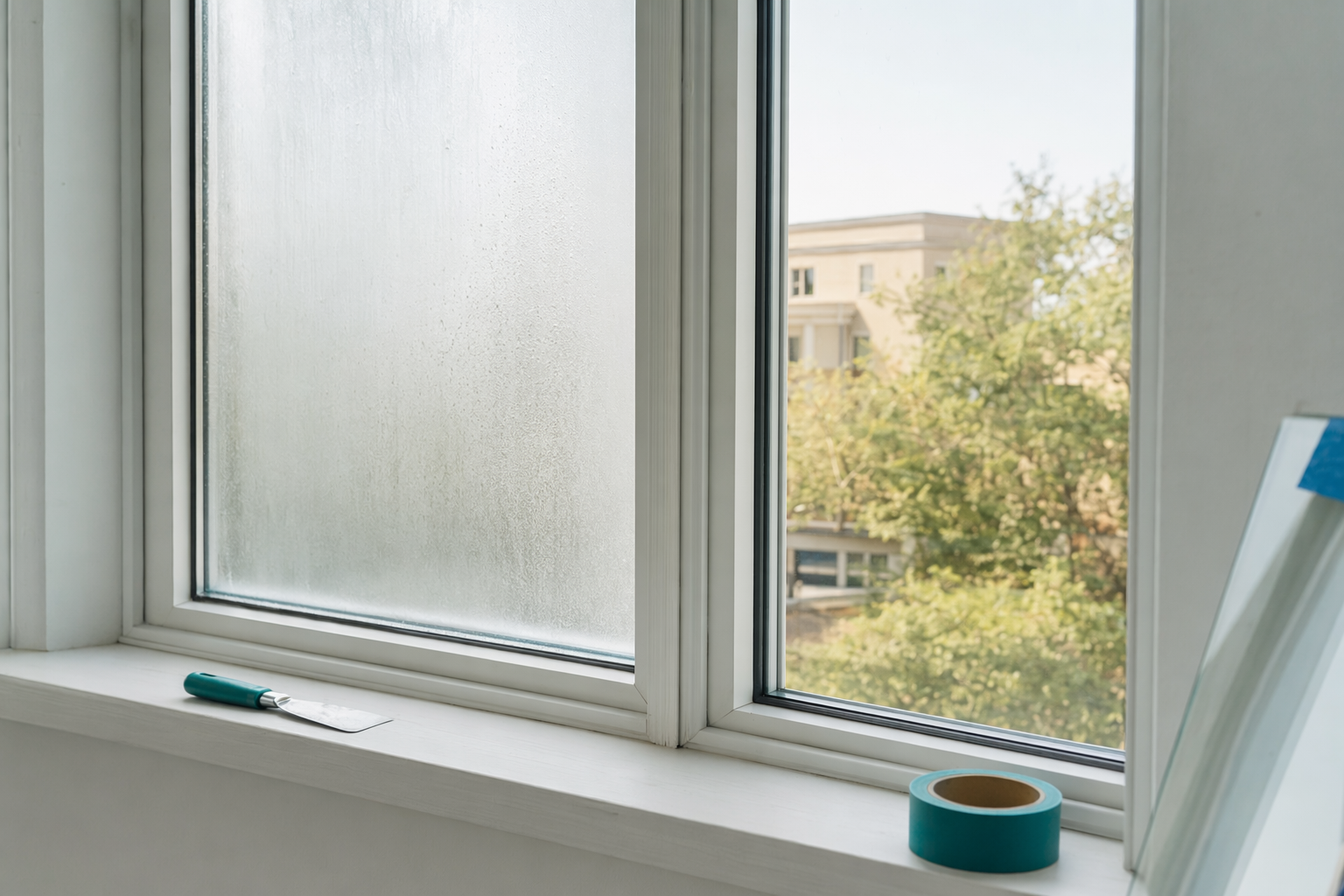
What to do right now (if your glass is foggy or you’re not sure why)
1. Keep an eye on safety: if you notice cracks, chips, loose glass, or a leak of any kind, treat it like a possible break and be careful around the area.
2. Don’t try DIY sealants or drilling holes to “fix” the fog—this can damage the window and create a bigger problem.
3. Clean gently and dry the glass so you can actually see the issue (fog between panes looks different from surface dirt).
4. If you’re a renter, tell your landlord/manager and ask who pays for glass repairs in your lease and local area. If it’s broken, ask about emergency steps.
- Fog between panes usually can’t be “un-fogged” from the outside.

Why fog happens in double-pane windows (the simple explanation)
Double-pane windows usually have two glass panes with a sealed air or gas space between them. That sealed space is meant to stay dry and insulating.
When the seal fails, moisture can get into the gap. Then you’ll see fogging or cloudiness that looks “trapped inside” the glass—often in the corners first, or across the whole pane over time.
In most cases, that fog is a sign the sealed unit (often called the IGU: insulated glass unit) has failed, not that the glass is dirty.
- Fog that won’t wipe away is often moisture trapped inside the sealed unit.
Can a foggy double-pane window be fixed without replacing the whole window?
Often, yes—depending on your window frame and what failed inside. For foggy double-pane windows, many repairs replace only the IGU (the glass-in-between unit) while keeping the existing frame and hardware.
However, whether an IGU-only replacement is possible depends on things like the frame type, the window’s size, how the unit is made, and whether the glass is standard or custom. Some window designs make IGU swaps harder.
It’s also possible for “foggy glass” to have other causes (like surface condensation from humidity or an airflow problem). That’s why a licensed, insured glass pro will usually confirm whether the fog is truly between panes before recommending replacement.
- Many foggy windows are IGU failures, not fixable by simple cleaning.
Defogging: when it’s mentioned—and when it’s not a real fix
You may hear about “defogging” services or kits. In practice, many true fog-between-panes cases are caused by a seal failure, and restoring the original sealed insulation is hard to do reliably.
Some companies offer methods that attempt to remove moisture and re-seal, but outcomes can vary, and it may not bring back the window’s original insulating performance.
The most dependable long-term solution is usually replacing the failed sealed unit. Ask your glass pro what they’re actually replacing (IGU only vs full window) and how the new unit is sealed.
- If the seal failed, a replacement IGU is often the better, more straightforward path.
Glass types (quick guide) and why they affect the repair
Home windows use different kinds of glass. The kind of glass can change both the cost and whether it can be swapped as an IGU.
- Single-pane: one layer of glass. It’s usually cheaper, but it insulates less.
- Double-pane: two layers with a sealed insulating space between.
- Tempered vs. annealed (regular glass): tempered glass breaks into small pieces and is commonly used where safety glass is required. Annealed glass is more likely to break into larger, sharper fragments. Codes often require tempered/safety glass for certain openings.
- Laminated glass: has an internal plastic layer that helps keep pieces together if it breaks. Sometimes used for impact resistance.
For foggy double-pane windows, the “between panes” failure usually involves the sealed unit, but the IGU may contain specific glass types depending on your window location and design.
- Glass type (tempered/annealed/laminated) can change what’s allowed and how the IGU is built.
How much does an IGU replacement cost? (honest ranges, not quotes)
Costs vary widely by region and by your exact window—especially the size, thickness, glass type (tempered/laminated), and whether it’s a standard IGU or a more custom build. The condition of the frame and the amount of “edge work” needed can also affect the price.
As a general ballpark, IGU replacement often falls in these ranges (not a quote):
- Small to medium double-pane IGU (typical residential sizes): about $200 to $600 per unit
- Larger or more complex IGUs (bigger panes, special glass): about $500 to $1,200+ per unit
If IGU-only replacement isn’t possible and a full window replacement is recommended, total costs are often much higher because you’re paying for labor and a new unit plus installation.
Because pricing is sensitive to details, ask for an itemized written estimate. Confirm whether you’re paying for IGU replacement only or full window replacement, and double-check the glass type used.
- Ranges depend on size, glass type, thickness, and whether IGU-only swap is possible.
Red flags to avoid (and how to stay in control of the quote)
Most glass pros are professional, but you should protect yourself. Watch out for pricing that’s vague or based on scare tactics, like pressure to replace the entire window when only the sealed unit is likely failing.
Before work starts, ask for a written estimate that clearly states:
- Whether it’s an IGU replacement or a full window replacement
- The glass type(s) (for example tempered safety glass if applicable)
- The warranty terms (and what’s covered)
- The total price and any assumptions (like frame condition)
You stay in control: compare at least two written estimates when possible, confirm the correct glass is being installed before the job is finalized, and only pay the final amount when you’re satisfied with the work.
- If someone won’t give a clear, written breakdown, consider getting another estimate.
Get matched with a licensed, insured local glass pro (it’s free)
Clearpane is a FREE matching service for the household. We don’t do the glass repair ourselves—we connect you with licensed, insured LOCAL GLASS PROS near you for residential window/IGU repairs.
If you want help finding the right option for your foggy double-pane window, tell us a little about your project (your ZIP and what kind of glass repair you need), and we’ll match you with pros who can check whether an IGU swap is the right fix.
Start here: get matched. You can also browse more practical help in repairs and cost basics in costs.
- Clearpane is free for the household—contact is only name, phone, project intent, language, and ZIP.
Foggy double-pane windows usually mean the sealed unit failed, and the common fix is replacing the IGU—Clearpane can match you with licensed, insured local pros for free.
Common questions
If my double-pane window is foggy, can I just clean it?
Usually, no. Fog that’s trapped between panes typically won’t wipe away because it’s inside the sealed unit. If the fog clears with cleaning, it may be surface condensation instead, which is a different situation.
Will a foggy window get worse over time?
Often, yes. As the sealed unit failure progresses, fog or cloudiness can spread and insulating performance usually drops. A pro can confirm the cause and suggest the best repair option.
Do I need to replace the whole window or just the IGU?
Many foggy double-pane issues are fixed by replacing the IGU (the sealed unit) while keeping the existing frame, but not every window design allows an IGU-only swap. A licensed, insured glass pro can confirm what’s possible for your specific frame and glass setup.
What information should I have ready when I contact a glass pro?
Have your window size (rough height and width), whether the fog is between panes, and photos if you can safely take them. Also share whether the window is in a door/shower area or any opening where safety glass rules may apply.
How do I avoid overpaying for foggy window repairs?
Ask for a written estimate that states whether it’s IGU replacement or full window replacement, and what glass type is included. Be cautious of scare tactics, cash-only pressure, or offers that don’t clearly explain the scope.